
Motocross Helmet: Buyer's Guide
- Safety Standards and Certifications That Matter
- MIPS Technology: Better Brain Protection
- Helmet Construction and Materials
- Finding Your Perfect Fit
- Comfort and Performance Features
- Helmet Categories by Riding Style and Budget
- Maintenance and Replacement Guidelines
- Value Considerations
- Making Your Final Decision
- Get Protected and Hit the Trails
The Short Answer: The best motocross helmet combines proper fit, safety certifications (ECE 22.06 or DOT), lightweight materials, and good ventilation. New riders should prioritize safety standards, correct sizing, and MIPS technology for better protection against rotational impacts - expect to spend $150-400 for quality protection.
Getting your first motocross helmet can feel overwhelming with so many options out there. This guide walks you through everything you need to find the perfect helmet that keeps you safe and comfortable on the trails.
The right helmet protects your head while ensuring you can focus on the ride ahead. From understanding safety certifications to finding the perfect fit, we'll cover the key factors that separate a good helmet from a great one.
Safety Standards and Certifications That Matter
Understanding safety certifications helps you choose protective gear that meets rigorous testing standards and provides reliable protection when you need it most.
Key Safety Certifications:
- DOT (Department of Transportation): Minimum U.S. requirement. Tests impact absorption, penetration resistance, and strap security.
- ECE 22.06: Best standard for motocross. Tests rotational impact forces and uses realistic headforms for more comprehensive protection.
- SNELL: Additional testing layer focused on penetration resistance. Less common in motocross but offers extra quality control.
MIPS Technology: Better Brain Protection
MIPS stands for Multi-directional Impact Protection System. Think of it as an extra safety layer inside your helmet that helps protect your brain during crashes.
What MIPS Does
Most dirt bike crashes happen at an angle, not straight-on. MIPS has a thin layer inside the helmet that slides slightly during impact, reducing the twisting forces that can cause brain injuries.
Why MIPS Matters
- Better protection during angled crashes (the most common type)
- Helps reduce concussion risk
- Only adds about 1-2 ounces to helmet weight
- Works with all other helmet safety features
MIPS helmets cost a bit more, but the added brain protection makes them worth considering if your budget allows.
Helmet Construction and Materials
Understanding helmet construction helps you choose between different materials and price points. Each material offers specific advantages depending on your riding style, budget, and performance requirements.
Shell Material Breakdown
Polycarbonate Helmets: Most affordable option that still provides good protection for recreational riders. These helmets use injection-molded construction and typically weigh more than composite alternatives.
Fiberglass Composite: Mid-range option offering the best balance of strength, weight, and cost. These helmets blend fiberglass with other materials to create lightweight yet strong shells.
Carbon Fiber: Carbon fibre is top-notch for its strength-to-weight ratio but it'll cost a pretty penny more than your standard polycarbonate lid. Premium choice for serious riders who want the lightest, strongest protection available.
|
Material |
Weight |
Durability |
Price Range |
Best For |
|
Polycarbonate |
Heavy |
Good |
$100-250 |
Beginner riders, budget-conscious |
|
Fiberglass Composite |
Medium |
Great |
$200-400 |
Intermediate riders, best value |
|
Carbon Fiber |
Light |
Best |
$400-700 |
Advanced riders, weight-conscious |
Finding Your Perfect Fit
Proper helmet fit affects both safety and comfort. A well-fitting motorcycle helmet contributes to a safer and more comfortable ride. If the helmet does not fit right, it can cause pain which often leads to dangerous distractions, and it may not completely protect the rider's head in a crash.
Measuring Your Head Size
Getting accurate measurements ensures you order the right size helmet:
- Use a soft measuring tape wrapped around the fullest part of your head, just above your eyebrows and ears
- Take the measurement at your forehead for the most accurate reading
- Compare your measurement to the manufacturer's specific sizing chart
- Round down if between sizes - Always aim to get a tight fitting helmet, if you fall between sizes round the size down, not up.
Head Shape Considerations
Different manufacturers design helmets for specific head shapes. Most riders fit into one of three categories:
- Long Oval: More extended from front to back than side to side
- Intermediate Oval: Slightly longer front to back (most common shape)
- Round Oval: Nearly equal width and length
Finding a brand that matches your head shape often matters more than finding the "best" helmet.
Proper Fit Checklist

A correctly fitted helmet should:
- Feel snug around your head and cheeks without causing discomfort
- Stay in place when you shake your head up and down or side to side (minimal movement)
- Have no pressure points or "hot spots" that cause discomfort
- Allow normal speech (slight cheek pressure is normal and expected)
- Create "chipmunk cheeks" when properly fitted
When your helmeted head experiences an impact, the impact-absorbing liner is designed to manage those forces. But if there's too much of a gap between the helmet and your head, you're basically setting yourself up to get smacked by your own safety gear.
Comfort and Performance Features
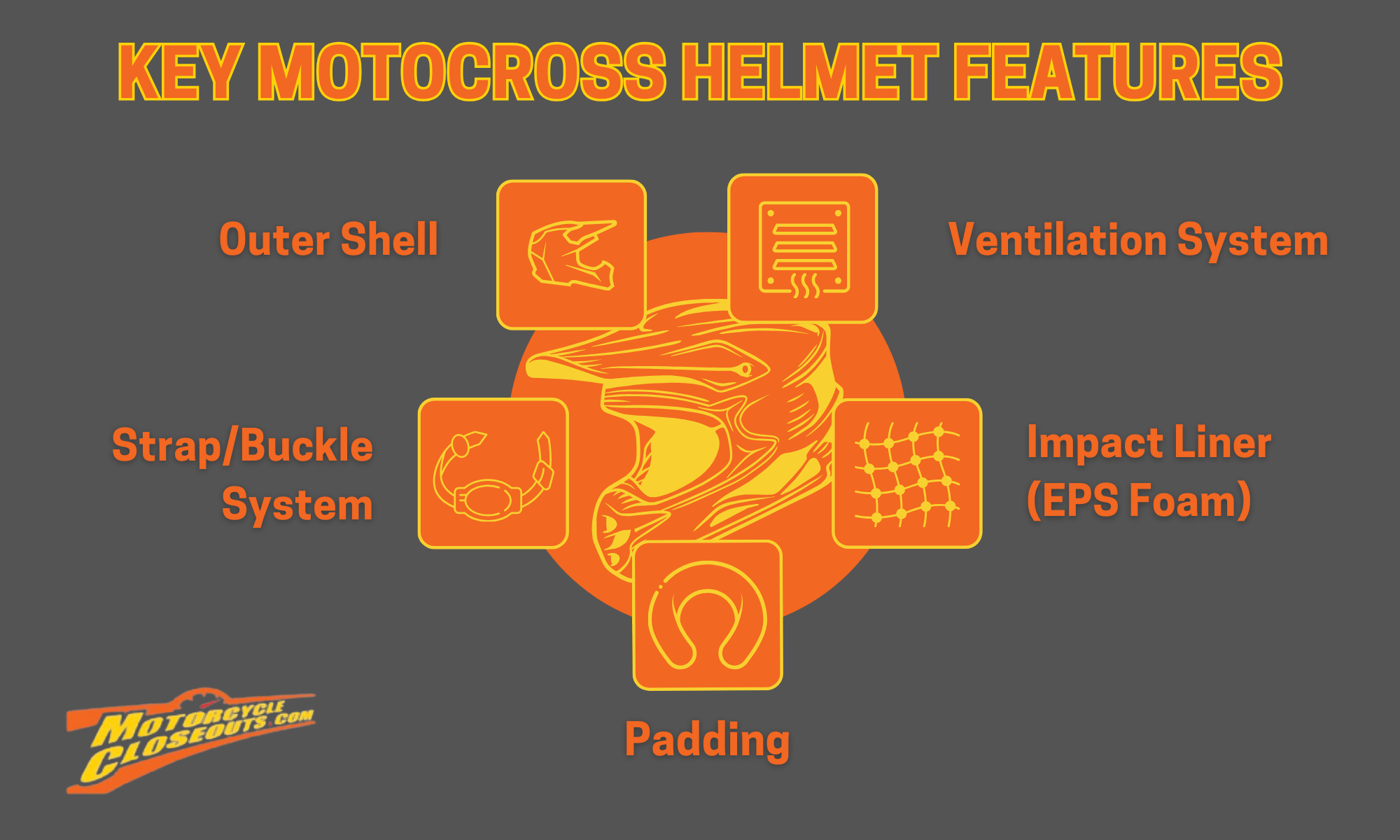
Modern motocross helmets incorporate advanced features that enhance comfort, visibility, and performance during demanding rides.
Ventilation Systems
Proper airflow prevents overheating and reduces goggle fogging:
- Multiple intake vents draw cool air into the helmet
- Exhaust ports remove hot air and moisture
- Internal air channels direct airflow across your head
- Breath deflectors prevent goggle fogging
Quality ventilation systems can make the difference between a comfortable ride and an overheated, distracted experience.
Padding and Liner Technology
- Removable Liners: Washable padding systems allow easy cleaning and maintenance. Anti-microbial treatments prevent odor buildup during extended use.
- Emergency Release Cheek Pads: Allow first responders to safely remove your helmet after accidents without moving your head or neck.
- Moisture-Wicking Materials: Advanced fabrics pull sweat away from your skin, keeping you drier and more comfortable during intense rides.
Weight Considerations
Helmet weight directly affects neck fatigue during long rides. Lighter helmets reduce strain but shouldn't compromise safety. Modern materials allow manufacturers to create lightweight helmets without sacrificing protection.
Helmet Categories by Riding Style and Budget
Different riders need different helmet features. Understanding these categories helps you choose the right balance of performance, features, and cost.
Entry-Level Helmets ($100-250)
Perfect for beginners and recreational riders:
- DOT or ECE certification
- Polycarbonate shell construction
- Basic ventilation systems
- Standard comfort padding
- Reliable protection at affordable prices
Mid-Range Performance ($200-400)
The sweet spot for most riders:
- MIPS technology for enhanced protection
- Fiberglass composite construction
- Advanced ventilation systems
- Removable, washable liners
- Emergency release features
Premium Professional ($400+)
Advanced features for serious riders:
- Carbon fiber or advanced composite shells
- Latest safety technologies
- Multiple shell sizes for optimal fit
- Professional-grade comfort features
- Lightweight, high-performance design
Maintenance and Replacement Guidelines
Proper helmet care extends its life and maintains protection levels.
When to Replace Your Helmet
Immediate Replacement Needed:
- After any significant impact, even without visible damage
- Cracks or damage to the outer shell
- Compressed padding that won't spring back
- Damaged or broken retention system
Proper Helmet Care
Regular Cleaning:
- Clean with mild soap and water only
- Remove and wash liners regularly
- Avoid petroleum-based cleaners that damage shell materials
- Air dry completely before storage
Storage Guidelines:
- Store in cool, dry places away from direct sunlight
- Use a helmet bag to prevent scratches
- Avoid leaving in hot vehicles or direct UV exposure
- Keep away from gasoline, solvents, and cleaning chemicals
Value Considerations
Long-Term Value Factors
- Durability Considerations: Higher-quality helmets often last longer and maintain their protective properties better over time.
- Replacement Part Availability: Some manufacturers offer replacement cheek pads, liners, and visors, extending your helmet's useful life.
- Resale Value: Premium helmets typically retain more value if you decide to upgrade, though safety considerations should always outweigh resale concerns.
Making Your Final Decision
Choosing the right motocross helmet requires balancing multiple factors to find the best combination for your specific needs, riding style, and budget.
Priority Checklist for New Riders
- Safety Certifications: Ensure DOT minimum, prefer ECE 22.06
- Proper Fit: Never compromise on sizing for price or features
- MIPS Technology: Invest in rotational impact protection if budget allows
- Ventilation Quality: Good airflow improves comfort and safety
- Budget Allocation: Plan for $150-400 for quality, safe protection
Advanced Rider Considerations
- Multiple Shell Sizes: Better-fitting helmets from manufacturers offering various shell sizes
- Weight Optimization: Carbon fiber construction for reduced neck fatigue
- Professional Features: Emergency release systems and premium comfort features
- Brand Consistency: Stick with manufacturers that fit your head shape well
Get Protected and Hit the Trails
Selecting the right motocross helmet sets the foundation for safe, enjoyable riding experiences. The right helmet balances safety certifications, proper fit, and comfort features within your budget.
Remember that the best helmet is the one that fits your head properly and meets current safety standards. Don't compromise on safety certifications or proper sizing for price considerations.
Complete Your Safety Setup with Motorcycle Closeouts
Ready to gear up for your next adventure? Motorcycle Closeouts offers premium motocross helmets at unbeatable prices, featuring significant savings on top brands without compromising safety or quality.
Why Choose Motorcycle Closeouts for Your Helmet:
- Certified Safety Standards: Every helmet meets or exceeds DOT and/or ECE requirements
- Top Brand Selection: Alpinestars, Bell, Fly Racing, and Leatt at closeout prices
- MIPS Technology Available: Advanced brain protection across multiple price points
- Complete Protection Package: Helmets, goggles, body armor, and riding gear in one place
Save 30-50% off retail prices on name-brand helmets while getting the same safety certifications. Browse our complete selection of discounted motocross helmets today and gear up for your next trail adventure with confidence!
Explore Popular Articles

The Best Motorcycle Helmet Audio System
Short Answer: The best motorcycle helmet audio system depends on how you ride. Bluetooth communicati...
How to Clean Motorcycle Helmet Pads
Keeping your helmet pads clean comes down to a few basics: warm water, mild soap, and a little time....

How to Winterize Your Motorcycle; Motorcycle Closeouts
Short Answer: Proper winter motorcycle storage starts with a few key steps: fill your gas tank and a...

What to Know When Riding in Cold Weather
Short Answer: Riding in cold weather takes extra preparation, the right gear, and awareness of how c...

Your Guide to Motorcycle & Motocross Eye Protection
Motorcycle riding offers a completely different experience than driving a car. Riders stay much more...

Motocross Helmet: Buyer's Guide
Safety Standards and Certifications That Matter MIPS Technology: Better Brain Protection Helmet Co...