
How to Winterize Your Motorcycle; Motorcycle Closeouts
Short Answer: Proper winter motorcycle storage starts with a few key steps: fill your gas tank and add fuel stabilizer, connect your battery to a tender, change the oil, and protect your bike with a breathable cover.
When temperatures drop and road salt starts piling up, most riders decide it's time to put the bike away, but parking your motorcycle in the garage and throwing a cover over it isn't enough. Without the right prep work, you could be looking at a dead battery, gummed-up fuel injectors, flat-spotted tires, or rust on metal surfaces come spring.
Winter storage may seem like a chore, but it doesn't have to be complicated. With a little work and the right supplies, you can protect your bike from the damage that cold weather and months of sitting can cause.
In this guide, we'll walk you through everything you need to know about storing your motorcycle for winter.
Why Proper Winter Storage Matters
Skipping winterization might save you a few hours now, but it can lead to expensive repairs and frustrating delays when riding season returns. Here's what can go wrong when a motorcycle sits for months without proper preparation.
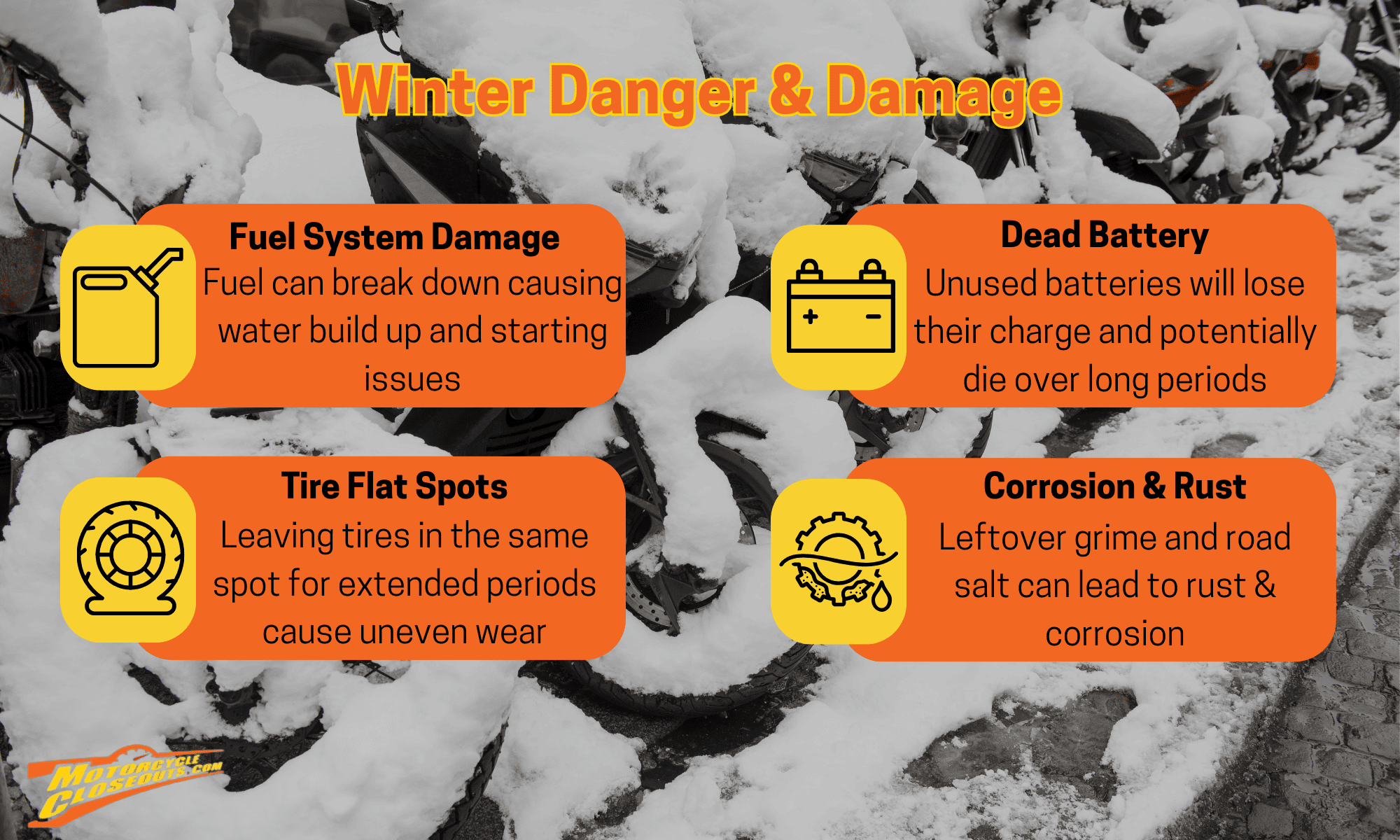
Fuel System Damage
Gasoline starts to degrade after about 30 days. As fuel breaks down, it forms varnish and gummy deposits that can clog fuel injectors and carburetor jets. Ethanol-blended fuel makes things even worse by attracting moisture, which leads to water buildup in your fuel tank. Left untreated, stale fuel can cause hard starting, rough idling, or a bike that won't run at all.
Dead or Damaged Battery
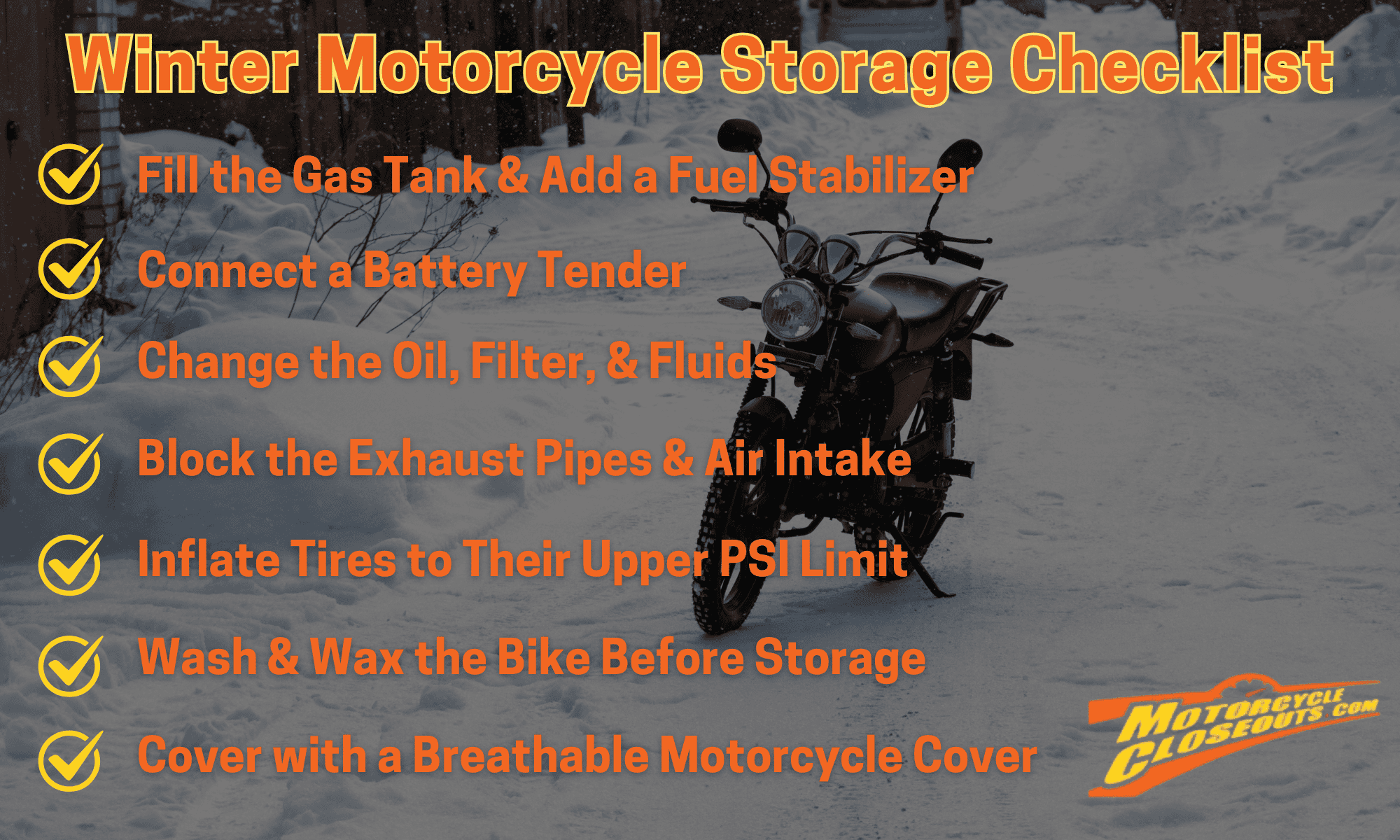
Motorcycle batteries lose charge over time, even when the bike isn't running. Cold temperatures tend to speed up this process. A battery that sits idle and uncharged for several months can sulfate, causing permanent damage that shortens its lifespan or kills it completely. Replacing a battery is an avoidable expense if you take a few minutes to set up a tender before storage.
Tire Flat Spots
When your motorcycle sits in one position for an extended period, the weight of the bike presses down on the same section of your rubber tires. This can cause flat spots, leading to vibration and uneven wear when you start riding again. In some cases, the damage becomes permanent and requires a new set of tires.
Corrosion and Rust
Moisture, dirt, and road salt left on metal surfaces will eat away at your bike over time. Exhaust pipes, brake rotors, chains, and even the inside of your fuel tank can all be affected by this over time. A thorough cleaning and protective measures before storage can prevent corrosion from taking hold during the winter months.
How to Prepare Your Motorcycle for Winter Storage
Before you tuck your bike away for the winter, a little maintenance goes a long way. These steps protect your fuel system, battery, and engine from the damage that comes with months of sitting in cold weather.
Fuel System Care
Your fuel system needs attention before storage. An empty or half-full gas tank invites condensation, which can cause rust inside the tank and water contamination in your fuel. Here's how to handle it:
- Fill the tank. Ride to a gas station near your home and top off with fresh fuel. A full tank leaves less room for air and moisture to collect.
- Add fuel stabilizer. Pour in the recommended amount of fuel stabilizer according to the product instructions. This keeps gas from breaking down and forming deposits in your fuel system.
- Run the engine. Ride home or let the bike idle for 5 to 10 minutes. This circulates the stabilized fuel through the entire system, including the fuel injectors or carburetor.
If you have a carbureted motorcycle, consider draining the carburetor bowl after running the stabilized fuel through. Fuel sitting in the carburetor bowl can evaporate over time, leaving behind gummy residue that clogs the jets and makes starting difficult in the spring. Fuel-injected bikes don't have a carburetor bowl to drain, and the sealed fuel system makes stabilized fuel the best protection for the injectors.
Battery Maintenance
A dead battery is one of the most common issues riders face after winter storage:
Battery Tender vs. Trickle Charger: A battery tender monitors charge levels and shuts off automatically when the battery is full. A trickle charger delivers a constant low charge, which can overcharge and damage the battery over time.
You also have two main options for where to keep the battery during storage:
- Leave it connected: If your bike is stored in a dry place with access to an outlet, connect a battery tender directly to the battery. A quick-connect pigtail makes this easier and avoids repeated removal of fairings or seat panels.
- Remove and store separately: If you're storing in an unheated garage or a space where temperatures drop below freezing, remove the battery and store it indoors. Keep it on a tender in a dry, room-temperature location.
Either way, a fully charged battery is far less likely to freeze or sulfate during the colder months.
Engine Oil and Fluids
Old oil contains contaminants like dirt, moisture, and acids that can corrode engine internals if left sitting for months. Changing your oil before storage protects your engine during the off-season.
- Change the oil and filter. Use the manufacturer-recommended oil weight. Fresh oil provides a clean protective layer on engine components.
- Check other fluid levels. Inspect your brake fluid, coolant, and clutch fluid. If any are low or overdue for replacement, top them off or flush and refill before storing. Old brake fluid absorbs moisture over time, which can lead to corrosion in your brake system.
- Consider antifreeze. If you're storing in a space where temperatures regularly drop below freezing, make sure your coolant has the correct antifreeze-to-water ratio to prevent freezing and potential damage.
Taking care of these fluids now means fewer surprises when you're ready to ride again.
Protecting Your Bike's Exterior and Components
Prepping the mechanical systems is only part of the job. Your bike's exterior and components also need protection from moisture, temperature fluctuations, and unwanted pests during the winter months.
Clean and Wax Before Storage
It might seem pointless to wash a bike you're about to put away, but dirt, bugs, and road grime can actually damage your finish if left sitting for months. Road salt is especially corrosive and will eat into metal surfaces and paint over time.
- Wash thoroughly: Clean every surface, paying extra attention to the underside of fenders, wheel spokes, and around the exhaust pipes where grime tends to build up.
- Dry completely: Trapped moisture under a cover leads to corrosion, so make sure the bike is fully dry before covering it.
- Apply wax: A coat of wax on painted surfaces and chrome adds a protective barrier against moisture and oxidation. If you have leather seats or saddlebags, use a leather conditioner to keep them from drying out and cracking.
Tires and Suspension
Tires take a beating when a motorcycle sits in one spot for months. The weight of the bike pressing down on the same patch of rubber can cause flat spots that affect handling and ride quality.
- Inflate to the upper PSI limit. Check your tire sidewall for the maximum recommended pressure and inflate to that level. This helps the tires hold their shape during storage. Just remember to adjust back to your normal riding pressure before hitting the road in spring.
- Use rear stands. If you have a center stand or rear stand, use it to lift the rear wheel off the ground. This takes the weight off the tire and helps prevent flat spotting.
- Front tire protection. If you can't lift the front wheel, place a piece of plywood or carpet under the tire to create a barrier between the rubber and cold concrete. This reduces moisture absorption and helps prevent flat spots.
If lifting the wheels isn't an option, try rolling the bike forward a few inches every couple of weeks to change the contact point.
Exhaust Pipes and Air Intake
Your exhaust pipes and air intake are open invitations for mice, insects, and other critters looking for a warm place to nest during winter. A blocked exhaust or chewed-up air filter can cause serious problems when you try to start up in spring.
- Block the exhaust. Use exhaust plugs or stuff a plastic bag into the opening of each pipe. Some riders use steel wool to deter rodents, but be careful not to push it too far inside.
- Cover the air intake. Wrap a plastic bag around the air filter or intake opening and secure it with a rubber band.
- Use a visual reminder. Tie a bright ribbon or tag to your handlebars so you don't forget to remove the plugs and coverings before firing up the engine.
Choosing the Right Storage Location
Where you store your motorcycle matters just as much as how you prepare it. The goal is to keep your bike in a dry place with minimal temperature fluctuation.
Heated Garage vs. Unheated Garage
A heated garage is ideal since stable temperatures reduce condensation and are easier on your battery, tires, and fluids. An unheated garage works too, as long as it stays dry. Just pay extra attention to battery care and consider storing it indoors.
Storage Unit
If you don't have garage space, a storage unit is a solid alternative. Look for a climate-controlled unit if possible, and make sure you can access it to check on the bike or connect a battery tender.
Outdoor Storage
Outdoor storage isn't ideal, but if it's your only option, invest in a high-quality, breathable motorcycle cover. Avoid plastic tarps, which trap moisture and can cause more damage than no cover at all. Secure the cover with tie-downs and park in a sheltered spot away from direct sunlight and heavy snowfall.
No matter where you store your bike, a breathable cover helps keep dust, moisture, and debris off the surfaces.
Storing Your Riding Gear for Winter
Your bike isn't the only thing that needs attention before the off-season. Taking a few minutes to properly store your riding gear keeps it in good shape and ready to go when warmer weather returns.
Helmet
- Clean the exterior with mild soap and water, then wipe it down with a microfiber cloth.
- Remove and wash the liner if it's removable, following the manufacturer's instructions.
- Clean the visor with a soft cloth and a cleaner designed for helmet shields to avoid scratching.
- Store in a helmet bag or on a shelf in a cool, dry place away from direct sunlight. Avoid hanging it on handlebars or mirrors, which can stretch out the liner over time.
Jacket, Pants, and Gloves
- Clean according to manufacturer instructions. Most textile gear can be machine washed on a gentle cycle, while leather should be wiped down with a damp cloth.
- Treat leather jackets with conditioner to keep them supple and prevent cracking.
- Store hanging or in breathable garment bags. Avoid plastic bags, which trap moisture and lead to mildew.
- Remove armor inserts and store them flat to help them keep their shape.
Boots
- Clean off dirt and debris and let them dry completely before storing.
- Use boot trees or stuff with newspaper to help your boots hold their shape.
- Store in a dry location away from extreme temperatures.
Avoid storing gear in damp garages, attics, or basements where humidity and temperature swings can cause damage.
Winter Motorcycle Storage Checklist
Put Your Bike to Bed the Right Way
Proper winter motorcycle storage doesn't take long, but it makes a big difference when riding season rolls back around. A full tank of stabilized fuel, a battery on a tender, fresh oil, and a clean bike under a breathable cover are the basics that protect your investment through the cold months.
Spend a few hours now, and you'll save yourself from dead batteries, gummed-up fuel systems, and frustrating repairs in the spring. When the weather warms up, your bike will be ready to hit the road instead of sitting in the shop.
Looking ahead to riding season? Check out Motorcycle Closeouts for deals on helmets, jackets, boots, and all the riding gear you need to hit the road in style.
Explore Popular Articles

How Dangerous Are Motorcycles, and How Much Does Gear Reduce the Risk?
Short Answer: Riding a motorcycle is significantly more dangerous than driving a car. The good news...

How Much Does It Cost to Buy & Ride a Motorcycle?
Short answer: A newer rider can often get started for about $6,000 to $12,000 when they include the...
CE Level 1 vs Level 2 Armor Explained
Short Answer: Both CE Level 1 and Level 2 armor pass European safety tests for impact protection. T...

What to Bring on a Motorcycle Road Trip
Short Answer: For a motorcycle road trip, pack your protective gear (helmet, jacket, gloves, boots,...

How to Get Your Motorcycle License: A Step-by-Step Guide for New Riders
Short Answer: Getting your motorcycle license takes three steps: passing a written knowledge test, p...

Everything You Need Before Your First Ride
Short Answer: Getting ready for your first motorcycle ride means lining up a few things before you t...