
The Best Motorcycle Helmet Audio System

Short Answer: The best motorcycle helmet audio system depends on how you ride. Bluetooth communication headsets lead the pack for group riders who want crystal-clear audio at highway speeds. Solo riders can get great sound quality from simpler audio solutions. The right system keeps you connected to music, GPS, phone calls, and fellow riders without taking your hands off the bars.
A quality motorcycle audio system lets you hear music, GPS directions, phone calls, and intercom conversations clearly, even at highway speeds. Helmet audio technology has come a long way in recent years, and today's systems offer everything from stereo music streaming to real-time group intercom. This guide breaks down the different types of motorcycle speakers, what features actually matter at highway speeds, and which audio solutions deliver the best sound performance for your money.
Types of Motorcycle Audio Systems
Not every rider needs the same setup. Before you start shopping, it helps to understand the main categories
of motorcycle audio available today.
Bluetooth Communication Headsets
These are the most popular motorcycle audio systems on the market. A Bluetooth headset mounts to the outside of your helmet and connects to speakers inside the ear pockets. Most units pair with your smartphone for music, phone calls, and GPS navigation. Higher-end models also include rider-to-rider intercom so you can talk with your group on the road. Leading brands in this space include Sena, Cardo, and Scorpion, each offering communication systems at a range of price points.
Bluetooth-Integrated Helmets
Some helmets come with the audio system already built in, with speakers, a microphone, and Bluetooth connectivity ready to go right out of the box. Brands like Sena, HJC, Scorpion, and LS2 all offer Bluetooth-integrated helmets in full-face, modular, and half-helmet styles. There's no installation to deal with. You charge the helmet, pair it with your phone, and ride. The trade-off is that you're locked into that specific helmet. If you switch lids, you'll need another integrated option or a separate headset.
Standalone Helmet Speakers
If you already own a Bluetooth communicator and want better sound quality, standalone helmet speakers are worth a look. Several companies make high-output speakers with neodymium magnet drivers and refined speaker design that replace the stock speakers in your headset. These upgraded units deliver stronger bass, wider frequency response, and crystal clear sound through a standard 3.5mm jack that works with most communication systems.
Touring Motorcycle Sound Systems
If you ride a touring motorcycle, you may be looking at a different kind of audio system altogether. Touring bikes often come with a factory radio and built-in fairing speakers. Riders who want more volume at highway speeds can upgrade with an amplifier, swap in higher-quality fairing speakers, or add a saddlebag kit with additional speakers for fuller sound from behind. Some riders also upgrade their source unit for better navigation and music control on the open road.
This guide focuses on helmet-based audio solutions since they work with any motorcycle, but touring riders can get the best of both worlds by pairing a fairing sound system with a quality helmet headset.
What to Look for in a Motorcycle Audio System
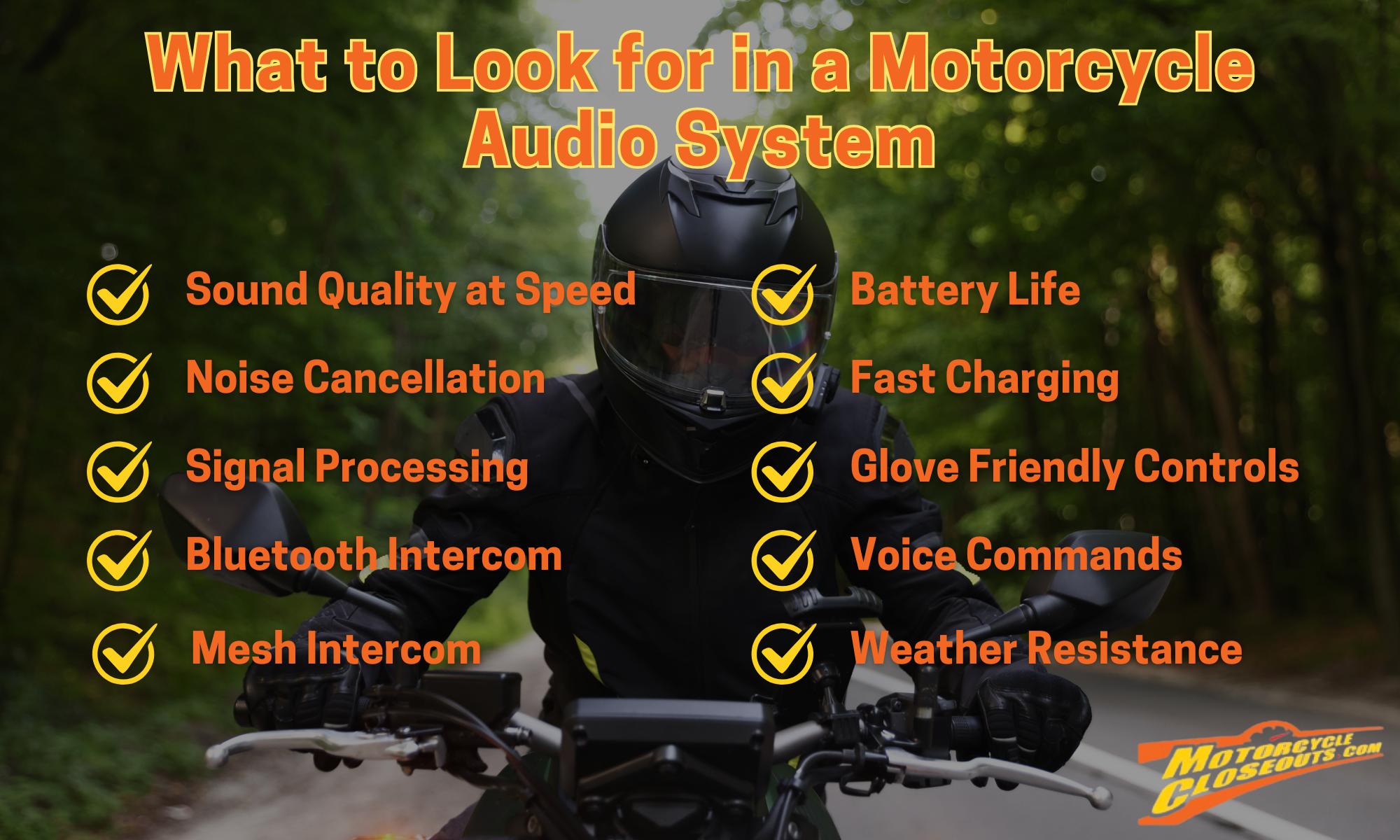
Not all motorcycle speakers are created equal. Here are the features that separate a sound system you'll love from one that ends up in a drawer.
Sound Quality at Speed
This is where cheaper systems fall short. Audio that sounds fine in your driveway can turn into a muffled mess once you're doing 70 mph. Wind noise at highway speeds is intense, and your speaker needs to cut through it.
Look for systems with 40mm speakers or larger. Premium motorcycle audio systems use speakers engineered by top audio brands that deliver exceptional sound quality even at full highway speed. The difference in your riding experience is immediate. You'll hear clearer vocals, stronger bass, and better overall sound performance compared to budget options with smaller drivers and weaker power handling.
Noise Cancellation and Signal Processing
A good motorcycle audio system doesn't just play sound louder. It also reduces the noise working against it. A digital signal processor (often labeled DSP, CVC, or ENC) filters out wind and engine noise so your music, calls, and intercom conversations come through clearly. Without decent noise cancellation, the person on the other end of a phone call hears nothing but wind.
Bluetooth vs. Mesh Intercom
If you ride with a group, this is a big decision.
Bluetooth intercom connects riders in a chain, and if one rider drops out of range, it can break the connection for everyone behind them.
Mesh intercom creates a self-healing network where the rest of the group stays connected even if one rider falls out of range. Mesh systems can handle 15 to 24 riders depending on the model.
For group rides, mesh is the better choice. Solo riders and pairs can save money with a Bluetooth-only system and still enjoy a great audio experience. It's also worth noting that some helmet brands like Shoei offer helmet-specific communication systems designed by Sena or Cardo that integrate cleanly into the shell without any external bulk.
Other Features That Matter
Beyond sound quality and intercom type, a few other things are worth paying attention to:
- Battery life ranges from six to eight hours on budget models and up to 13 or more hours on premium units. Long days on the bike demand longer battery life.
- Fast charging through USB-C is available on many newer systems and can give you a quick boost during a lunch stop.
- Glove-friendly controls make a real difference. Big buttons or a scroll wheel beat tiny flush-mounted controls when you're wearing riding gloves.
- Voice commands on most mid-range and premium systems let you control music, calls, and navigation hands-free while you ride.
- Weather resistance is a must. Look for an IP65 or higher waterproof rating so your audio system holds up when you get caught in the rain.
How to Choose the Right System for Your Ride
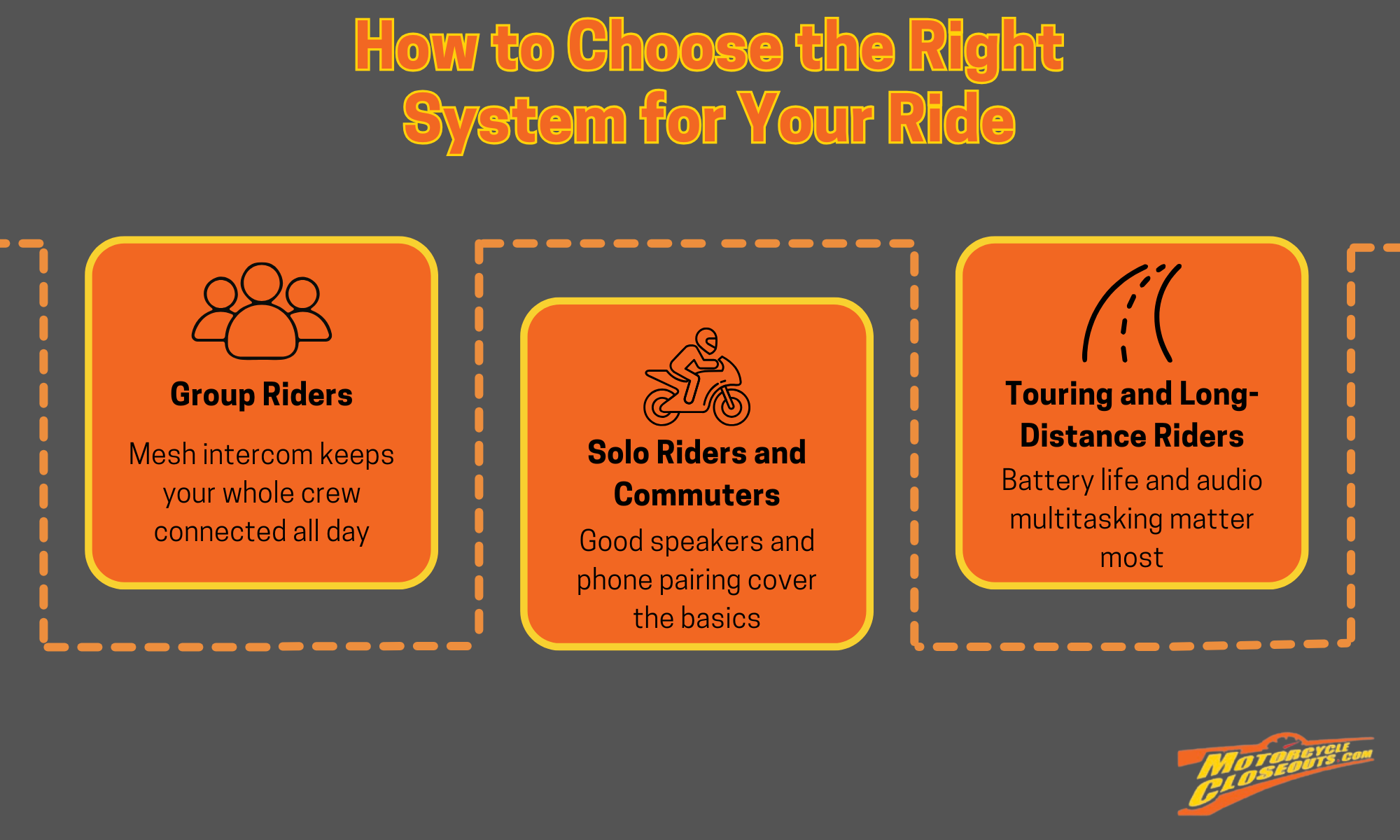
With so many audio solutions on the market, narrowing down your options comes down to how you actually use your motorcycle.
Group Riders
If you regularly ride with other people, prioritize a system with mesh intercom, high-quality speakers, and strong noise cancellation. Look for models that support large group connectivity and offer voice controls so you can manage calls, music, and intercom without lifting a hand off the bars. A battery life of 13 hours or more will keep you connected through a full day on the bike.
Solo Riders and Commuters
If you mostly ride alone, you don't need to pay for advanced intercom features. A Bluetooth-only system with good speakers, phone connectivity, and GPS audio will cover everything you need. Focus your budget on sound quality and comfort. A system with a user-adjustable EQ and a slim speaker profile will make your daily ride more enjoyable without adding bulk inside your helmet.
Touring and Long-Distance Riders
Long-distance riding puts every piece of gear to the test. Battery life, charging speed, and audio clarity over hours of highway speeds all matter more on a 500-mile day than a quick Saturday morning ride. If your motorcycle has a built-in stereo system or fairing speakers, a helmet headset that pairs with your bike's audio adds another layer to the experience. Look for systems that support audio multitasking so you can hear GPS directions, intercom, and music at the same time.
Tips for Getting the Best Audio Experience
Even the best motorcycle audio system won't reach its full potential without proper setup.
Get Your Speaker Placement Right
Position your speakers directly over your ear canals. Even a small offset reduces volume and clarity. Most systems include foam spacing pads to help you dial in the fit.
Make Sure Your Helmet Fits Properly
A properly fitted helmet creates a tighter seal against wind noise, which helps your speakers compete with outside sound. A loose helmet lets in more noise and hurts your overall audio experience.
Wear Ear Plugs
Foam ear plugs reduce harmful wind noise while letting your speaker audio come through more clearly at lower volumes. Many experienced riders consider hearing protection just as important as their helmet.
Keep Your Firmware Updated
Manufacturers regularly push updates that improve sound quality, noise cancellation, and connectivity. Connect your headset to its companion app periodically to stay current.

Find the Right Motorcycle Audio System at Motorcycle Closeouts
Upgrading your riding experience with a helmet audio system doesn't have to drain your wallet. At Motorcycle Closeouts, we carry communication systems from brands such as Sena, Cardo, and Scorpion, plus Bluetooth-ready helmets from Shoei, HJC, LS2, and more, all at closeout prices. Every product is first-quality and backed by the manufacturer's warranty, so you're not giving up anything but the retail markup.
Closeout inventory moves fast, so don't wait too long when you spot a deal. Browse our communication systems and Bluetooth-ready helmets to find your next upgrade at a price you'll feel good about.
Explore Popular Articles

The Best Motorcycle Helmet Audio System
Short Answer: The best motorcycle helmet audio system depends on how you ride. Bluetooth communicati...

How to Clean Motorcycle Helmet Pads
Keeping your helmet pads clean comes down to a few basics: warm water, mild soap, and a little time....

How to Winterize Your Motorcycle; Motorcycle Closeouts
Short Answer: Proper winter motorcycle storage starts with a few key steps: fill your gas tank and a...

What to Know When Riding in Cold Weather
Short Answer: Riding in cold weather takes extra preparation, the right gear, and awareness of how c...

Your Guide to Motorcycle & Motocross Eye Protection
Motorcycle riding offers a completely different experience than driving a car. Riders stay much more...

Motocross Helmet: Buyer's Guide
Safety Standards and Certifications That Matter MIPS Technology: Better Brain Protection Helmet Co...