
What to Bring on a Motorcycle Road Trip
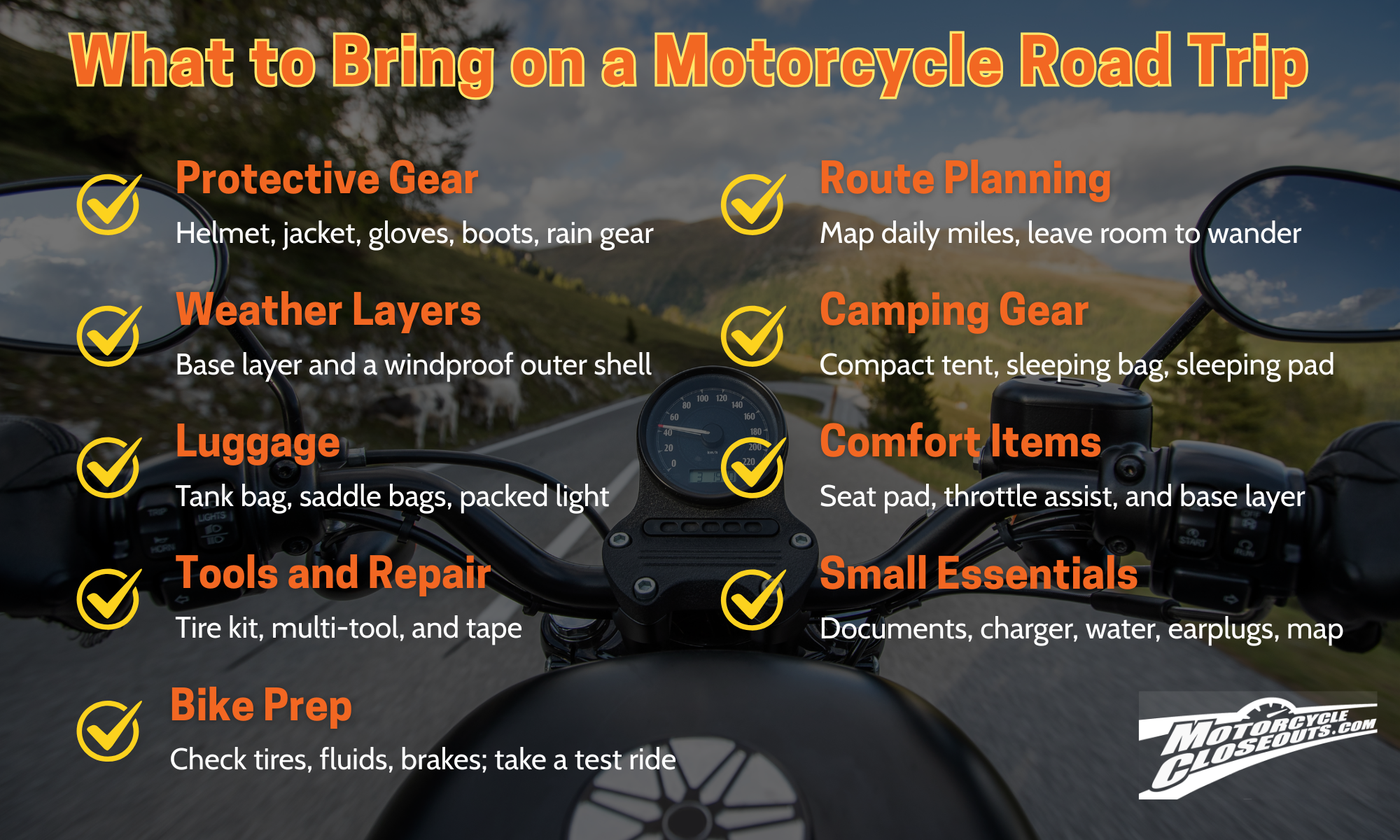
Short Answer: For a motorcycle road trip, pack your protective gear (helmet, jacket, gloves, boots, and rain gear), smart luggage like a tank bag and saddle bags, a basic tool kit with flat tire supplies, and a route plan, weather layers, and personal items like documents, water, and a phone charger. Pack light, balance the weight on your bike, and always have a plan B.
There's nothing quite like a long ride with the open road stretching out in front of you. A good motorcycle road trip clears your head, shows you new places, and reminds you why you fell in love with riding in the first place. But a great trip starts before you ever turn the key, and what you bring (or leave behind) can make the difference between your favorite ride and a long day stuck on the shoulder. This guide walks through everything you should pack for a motorcycle trip, so you can spend less time worrying and more time enjoying the view.
Start With Your Protective Gear
Your riding gear is the one thing you should never cut corners on. On a longer trip, it also fights fatigue. Cold, wind, and soreness wear you down hour after hour, and a worn-out rider reacts more slowly on twisty roads and busy highways alike.
Every rider should have:
- Helmet: A DOT-approved helmet is your most important piece of gear. A full-face helmet gives you the most protection and cuts down on wind noise.
- Jacket: A good motorcycle jacket protects you from wind, sun, and road rash. Look for CE-rated armor in the shoulders, elbows, and back.
- Gloves: Your hands control the bike and take the brunt of a fall. Pick gloves with a solid grip and knuckle protection.
- Boots: Over-the-ankle boots protect your feet and give you support at every stop.
- Rain gear: Weather changes fast on the road. A packable rain suit takes up almost no space and keeps you dry when the sky opens up.
Bring layers too. A cool mountain road in the morning can turn into a hot afternoon by lunch, so a base layer and something windproof help you adjust as the miles add up.
Pack Smart: Luggage and Storage
You only have so much room on a bike, so how you pack matters as much as what you pack.
- Tank bag: Great for the things you reach for often, like your phone, wallet, snacks, and a paper map. Many tank bags have a clear top so you can follow your route at a glance.
- Saddle bags: Your main storage for clothes, tools, and gear. Keep the weight even on both sides so your bike handles well.
- Tail bag or dry bag: Good for bulkier items like a sleeping bag if you plan to camp.
A simple rule: lay out everything you think you need, then look for what you can leave behind. Riders almost always overpack, so cut the extras and keep the must-haves. Pack the heavy stuff low and toward the center of the bike to protect your handling.
Tools and Roadside Repairs
A flat tire or a loose bolt shouldn't end your trip. A small tool kit and a little know-how can get you back on the road in minutes.
Pack these basics:
- A tire repair kit with plugs and a small air pump or CO2 cartridges
- A multi-tool and the specific tools your bike needs for common fixes
- Zip ties, electrical tape, and a few spare fuses
- A tire pressure gauge
- A flashlight or headlamp
Knowing how to use these tools matters as much as carrying them, so practice a tire plug at home before you ever need it on the side of the road. Always have a plan B too: save a roadside assistance number in your phone and know which shops sit along your route, because even riders who can fix almost anything run into surprises far from the nearest town.
Get Your Bike Trip-Ready Before You Go
Your packing list won't matter much if your bike isn't ready for the miles. A week or two before you leave, check your tires for good tread and proper pressure. Worn rubber is no friend on a long trip. Look over your chain, brakes, and lights, and top off or change your oil and other fluids if you're due for service.
Then, take your own bike out for a short shakedown ride with your gear loaded. A test run shows you how the bike handles with the extra weight and gives you time to fix anything small before the big day. Sorting out a problem in your own driveway is a lot less stressful than discovering it the next morning on the road.
Plan Your Route (But Leave Room to Wander)
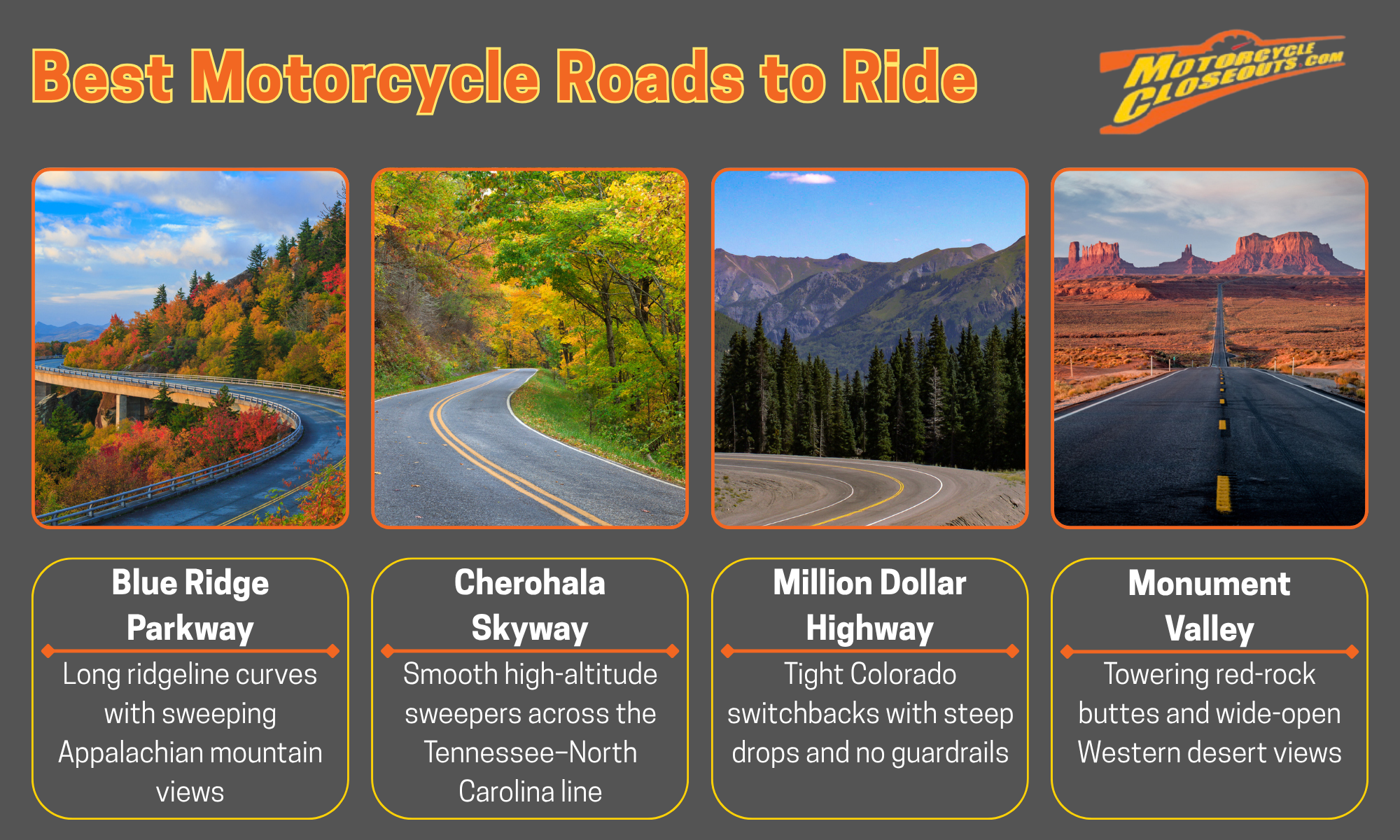
Half the fun of a motorcycle road trip is the road itself. The United States is full of incredible motorcycle rides, and a little planning helps you find the good stuff. Some of the best motorcycle roads riders talk about include:
- The Blue Ridge Parkway on the East Coast, with its long, scenic stretches and mountain views
- The Cherohala Skyway, a favorite for its smooth curves and high overlooks
- The Million Dollar Highway in Colorado, a winding road with steep drops and big payoffs
- Monument Valley out West, with its towering red-rock buttes and wide-open desert views
If you ride an adventure bike, you might mix in a dirt road or back route for a change of pace. Map out your daily miles, but don't pack your schedule too tight. Some of the best memories come from a scenic byway you didn't plan on, a hot springs soak after a long day, or a roadside diner in a town you'd never heard of. Build in time to stop and explore a new place, and if you're meeting friends, plan your arrival so you're not rushing the last few hundred miles.
Camping or Hotels?
How you sleep shapes what you pack, and the choice comes down to your budget, your comfort, and how much gear you want to carry.
- Hotels and motels: Less to carry. You can travel light and focus on the riding.
- Camping: More freedom and lower cost, but you'll need a compact tent, a sleeping bag, and a sleeping pad. Look for gear that packs down small.
Either way, plan where you'll stop for the night before you set out the next day. Rolling into a new town after dark, looking for a room is no fun and can be unsafe, and popular spots near a national park can fill up fast.
Stay Comfortable Over the Long Haul
Comfort keeps you safe. A rider who's stiff, sore, or tired makes slower decisions, and that adds up over a long trip. Plan to stop every 100 miles or so to stretch your legs, drink water, and rest your hands. A quick walk around the parking lot at a gas station does more for your focus than pushing through another hour in the saddle.
Small upgrades make a big difference in motorcycle travel. A seat pad eases pressure on long days, a throttle assist lets you relax your grip on a long scenic route, and a moisture-wicking base layer helps regulate your temperature mile after mile.
Don't Forget the Small Stuff
These little items are easy to overlook but make a big difference:
- Driver's license, registration, and insurance card
- A small first aid kit
- A phone charger and a backup battery
- Water and a few snacks
- Sunscreen and lip balm
- Earplugs for long highway days
- A spare key, stored separately from your main key
Tuck a paper map in your tank bag as a backup, too. Cell service drops out on plenty of mountain roads and back routes, and a map never needs a charge.
Ride Prepared, Ride Happy
A motorcycle road trip is one of the best ways to see the country. The right packing list keeps you safe, comfortable, and ready for whatever the road throws at you, so you can focus on the ride instead of the what-ifs. Go over your gear the night before, get a good night's sleep, and you'll be ready to roll the next morning.
Before your next motorcycle road trip, MotorcycleCloseouts has the gear that fills out your packing list: helmets, jackets, gloves, boots, rain gear, tank bags, and saddle bags from top brands at closeout prices, often 30 to 50 percent off retail. Everything is first-quality and backed by full manufacturer warranties, so you can outfit the whole trip for less. Browse our current deals online, reach out to our rider support team for help matching gear to your route, or stop by our Fast Gear Fast store in Kansas City before you hit the road!
Explore Popular Articles
How Dangerous Are Motorcycles, and How Much Does Gear Reduce the Risk?
Short Answer: Riding a motorcycle is significantly more dangerous than driving a car. The good news...

How Much Does It Cost to Buy & Ride a Motorcycle?
Short answer: A newer rider can often get started for about $6,000 to $12,000 when they include the...
CE Level 1 vs Level 2 Armor Explained
Short Answer: Both CE Level 1 and Level 2 armor pass European safety tests for impact protection. T...
What to Bring on a Motorcycle Road Trip
Short Answer: For a motorcycle road trip, pack your protective gear (helmet, jacket, gloves, boots,...
How to Get Your Motorcycle License: A Step-by-Step Guide for New Riders
Short Answer: Getting your motorcycle license takes three steps: passing a written knowledge test, p...
Everything You Need Before Your First Ride
Short Answer: Getting ready for your first motorcycle ride means lining up a few things before you t...