
Everything You Need Before Your First Ride
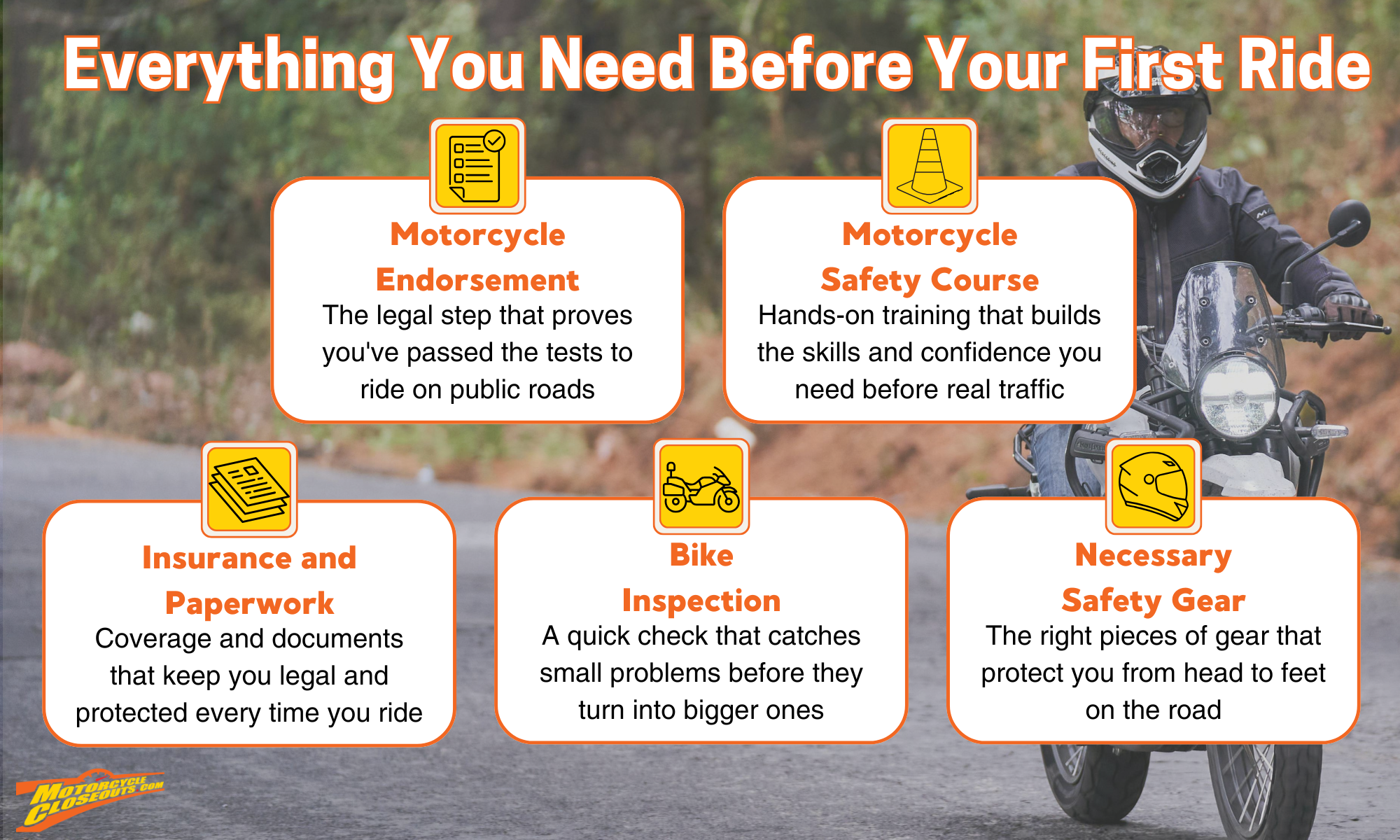
Short Answer: Getting ready for your first motorcycle ride means lining up a few things before you twist the throttle. A little prep on the front end saves you from headaches, fines, or worse once you're on the road. You need a motorcycle endorsement on your license, proper insurance, a safety course under your belt, a pre-ride inspection, and the right gear.
Preparing for your first ride is about more than firing up the engine. Every responsible rider must take the time to handle the paperwork, learn the basics, and gear up correctly. This guide walks you through what every new motorcycle rider needs before that first ride, so you can focus on the road instead of what you forgot.
Get Your Motorcycle Endorsement
In the United States, riding a motorcycle on public roads requires a motorcycle endorsement or separate motorcycle license. Cars and motorcycles are both motor vehicles, but they come with different licensing rules in every state.
Most states require you to:
- Pass a written knowledge test on motorcycle safety and traffic laws
- Pass a riding skills test at the DMV or through an approved safety course
- Meet the age and permit-holding requirements for your state
- Pay an endorsement fee
A motorcycle endorsement is a legal requirement, and riding without one can void your insurance policy if a motorcycle accident happens. Check your state's DMV website for the exact steps. Some states waive the skills test if you complete a Motorcycle Safety Foundation (MSF) course.
Take a Motorcycle Safety Course
Even if your state does not require a course, signing up for one is one of the smartest moves a new rider can make. MSF Basic RiderCourse classes teach you how to handle the bike in a safe, controlled setting before you ever hit traffic.
A typical course covers:
- Braking, turning, and shifting basics
- How to handle the bike at low speeds
- Swerving and emergency stops
- Group riding etiquette
- Real-world hazards and how to avoid them
Completing an MSF course can also lower your insurance rates and may earn you medical benefits discounts through some providers. Many courses supply the bike and protective headgear, so you can try riding before spending big on your own gear.
Handle Insurance and Paperwork
Before your first ride, your bike needs to be titled, registered, and insured. Riding without coverage is a fast way to turn a minor incident into a financial and legal disaster. A standard insurance policy for a motorcycle usually includes liability, collision, and comprehensive options, plus medical benefits for the rider and any motorcycle passenger.
Before you roll out, double-check:
- Your registration is current and the license plate is mounted
- Your insurance card is in your wallet or saved to your phone
- Your motorcycle endorsement is active on your license
- You know your state's helmet law and other rider requirements
Keep copies of everything in a dry pocket or under the seat. If you ever get pulled over or in a crash, having your paperwork ready saves time and stress.
Inspect Your Bike Before Every Ride
A quick pre-ride inspection can catch small problems before they become big ones. Most riders follow the T-CLOCS checklist from the MSF:
- Tires and wheels: Check pressure, tread, and look for cracks or damage
- Controls: Test levers, cables, throttle, and the clutch
- Lights and electrics: Headlights, brake lights, turn signals, and horn
- Oil and fluids: Engine oil, brake fluid, coolant, and fuel
- Chassis: Frame, suspension, chain or belt tension, and fasteners
- Stands: Kickstand and center stand move freely and spring back
Run through this list before every motorcycle ride, not just your first one. It only takes a couple of minutes and can prevent a breakdown in the middle of a long ride.
Gear Up Head to Toe
Knowing what to wear on a motorcycle is just as important as knowing how to ride one. Proper safety gear is your only layer of protection between you and the road. Skimping here is the fastest way to turn a simple slide into a serious injury.
Helmet and Eye Protection
A DOT-approved helmet is required by helmet law in most states and gives you the highest level of face protection and head coverage. A full-face helmet offers the most protection by covering your chin, jaw, and face in one piece. For riders who want more airflow, modular and open-face helmets are good options, but you'll want a separate face shield, safety glasses, or goggles for eye protection.
Wind, debris, and bugs at highway speeds can shut your eyes faster than you think. A face shield keeps your vision clear without adding bulk. Disposable foam plugs are also a smart add-on to protect your hearing on long rides.
Motorcycle Jacket and Pants
A motorcycle jacket built for riding does more than look cool. Leather and textile riding jackets are made to resist abrasion, shrug off weather, and hold CE-rated armor at the shoulders, elbows, and back. For warm weather, mesh jackets let air flow through while still covering your upper body.
Regular denim jeans shred on asphalt in a slide, so motorcycle pants with reinforced panels or built-in armor are a smarter pick. At the very minimum, always wear long pants. Shorts leave your skin open to road rash, exhaust burns, and flying debris.
Gloves and Boots
Motorcycle gloves protect your hands, which are your main link to the bike and the first thing you put down in a fall. Look for gloves with:
- Knuckle armor
- Reinforced palm panels
- Double-stitched seams
- A secure wrist closure
Motorcycle boots cover the ankle bone and give you support that regular sneakers cannot match. Solid soles also keep your feet from slipping off the pegs in wet weather. Save the sandals and low-top shoes for after the ride.
Plan Your First Ride Smart
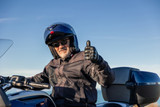
 \
\
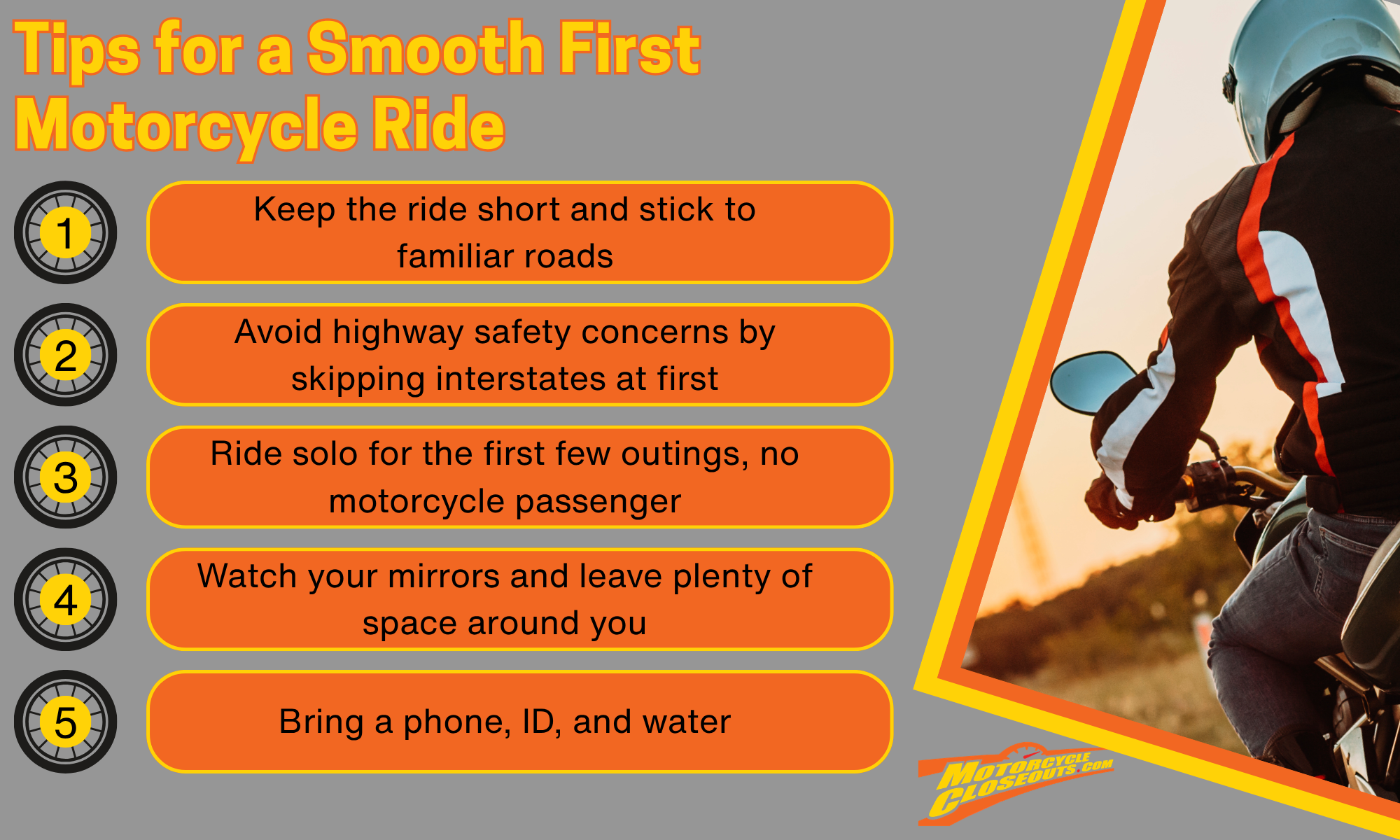
Where and when you ride your first time matters. Empty parking lots and quiet neighborhood streets are great spots to build confidence before heading into heavy traffic. Pick a clear day with good weather conditions so wind, rain, or cold weather does not add stress to an already busy brain. Keep the ride short, stick to familiar roads, and skip the interstates for now to avoid highway safety concerns while you're still learning the bike.
Ride solo for the first few outings with no motorcycle passenger, watch your mirrors, and leave plenty of space around you. Bring a phone, ID, and water before you head out. Hot weather calls for extra hydration and ventilated gear, while cold weather means layers under your riding jacket and maybe heated gear. Either way, gear that fits the conditions makes the difference between an enjoyable ride and a miserable one.
Ride with Confidence
Getting ready for your first ride takes a little work on the front end, but every step is worth it. A motorcycle endorsement, a safety course, current insurance, a clean pre-ride inspection, and the right gear all set you up for a safer and more enjoyable ride.
At Motorcycle Closeouts, we stock DOT-approved helmets, riding jackets, motorcycle pants, gloves, and boots from top brands at 30-50% percent off retail. Every item is first-quality, backed by the full manufacturer's warranty, and hand-picked by real riders who know what works. Our team is ready to help you find the right gear in the right size, and our easy return policy means you can shop with peace of mind.
Check out our current inventory today and gear up for a first ride you'll never forget.
Explore Popular Articles
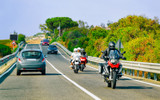
How Dangerous Are Motorcycles, and How Much Does Gear Reduce the Risk?
Short Answer: Riding a motorcycle is significantly more dangerous than driving a car. The good news...

How Much Does It Cost to Buy & Ride a Motorcycle?
Short answer: A newer rider can often get started for about $6,000 to $12,000 when they include the...
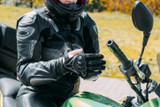
CE Level 1 vs Level 2 Armor Explained
Short Answer: Both CE Level 1 and Level 2 armor pass European safety tests for impact protection. T...
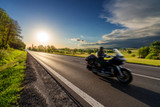
What to Bring on a Motorcycle Road Trip
Short Answer: For a motorcycle road trip, pack your protective gear (helmet, jacket, gloves, boots,...
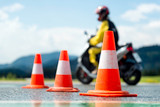
How to Get Your Motorcycle License: A Step-by-Step Guide for New Riders
Short Answer: Getting your motorcycle license takes three steps: passing a written knowledge test, p...
Everything You Need Before Your First Ride
Short Answer: Getting ready for your first motorcycle ride means lining up a few things before you t...