
What to Wear on a Motorcycle
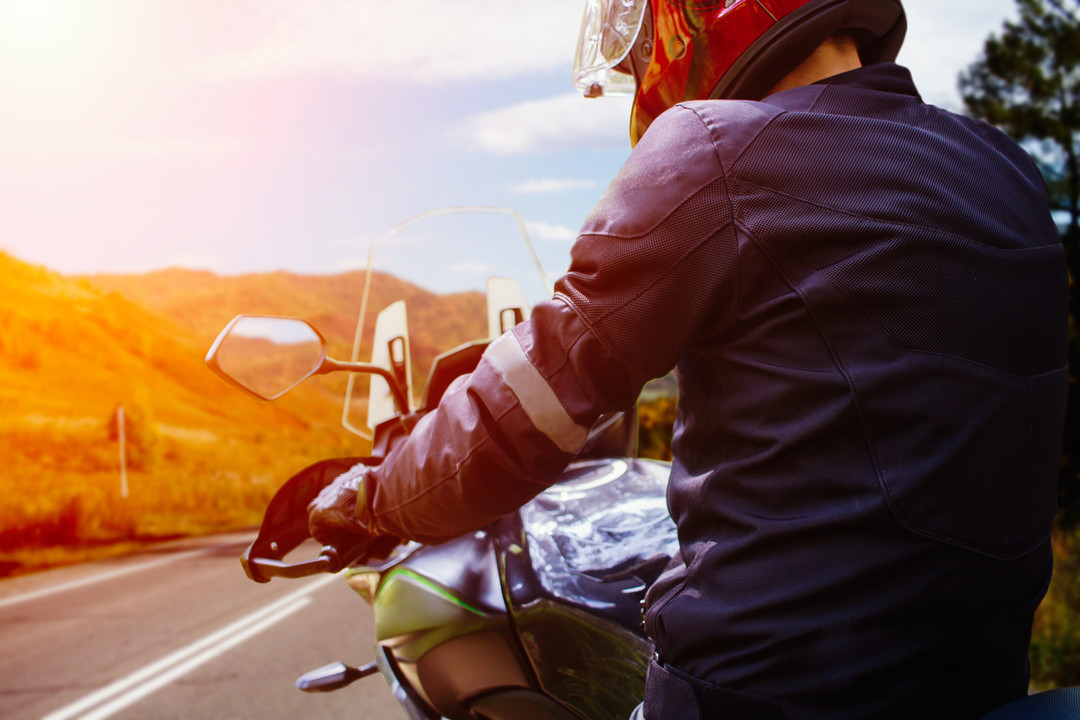
Short Answer: Every motorcycle rider needs a DOT-approved helmet, protective jacket, riding gloves, long pants, and sturdy boots. This protective gear shields you from road hazards, weather conditions, and serious injury if a motorcycle accident occurs.
Riding a motorcycle is one of the most freeing experiences on the road, but that freedom comes with responsibility. Unlike a car, there's no metal frame or airbag between you and the pavement. Your gear is your first and only line of defense.
The good news is you don't have to sacrifice comfort or style in order to stay protected. Modern motorcycle clothing combines safety features with breathable materials, weather adaptability, and designs that can fit the preferences of any rider. The right riding gear lets you focus on the ride, not on wind chill, rain, or wondering if your jacket can handle a slide.
This guide breaks down everything you need to wear on a motorcycle, from your helmet to your boots, and how to adapt your riding gear to any weather conditions.
Why Wearing the Right Motorcycle Gear Matters
A motorcycle helmet is the single most important piece of protective gear you can wear. According to the National Highway Traffic Safety Administration (NHTSA), helmets saved an estimated 1,872 lives in 2017 alone. Head injuries remain the leading cause of death in motorcycle crashes, and a DOT-approved helmet significantly reduces that risk.
In a motorcycle crash, exposed skin meets asphalt at high speed, and regular jeans and a t-shirt offer almost no abrasion resistance. Protective clothing made from leather or reinforced textiles can mean the difference between road rash and walking away with bruises.
Comfort and Focus
The right gear also keeps you comfortable and alert. Wind fatigue, sunburn, rain, and temperature swings all take a toll on your body during a motorcycle ride. Being cold, wet, or distracted by discomfort, can cause your reaction times to suffer and can lead to additional distractions.
Helmet Laws and Legal Requirements
Helmet laws can vary from state to state. Some require all riders to wear helmets, while others only apply to riders under a certain age. Regardless of legal requirements, a responsible rider always treats proper riding gear as non-negotiable. Your safety isn't worth gambling on.
Helmets and Eye Protection
Choosing the Right Motorcycle Helmet
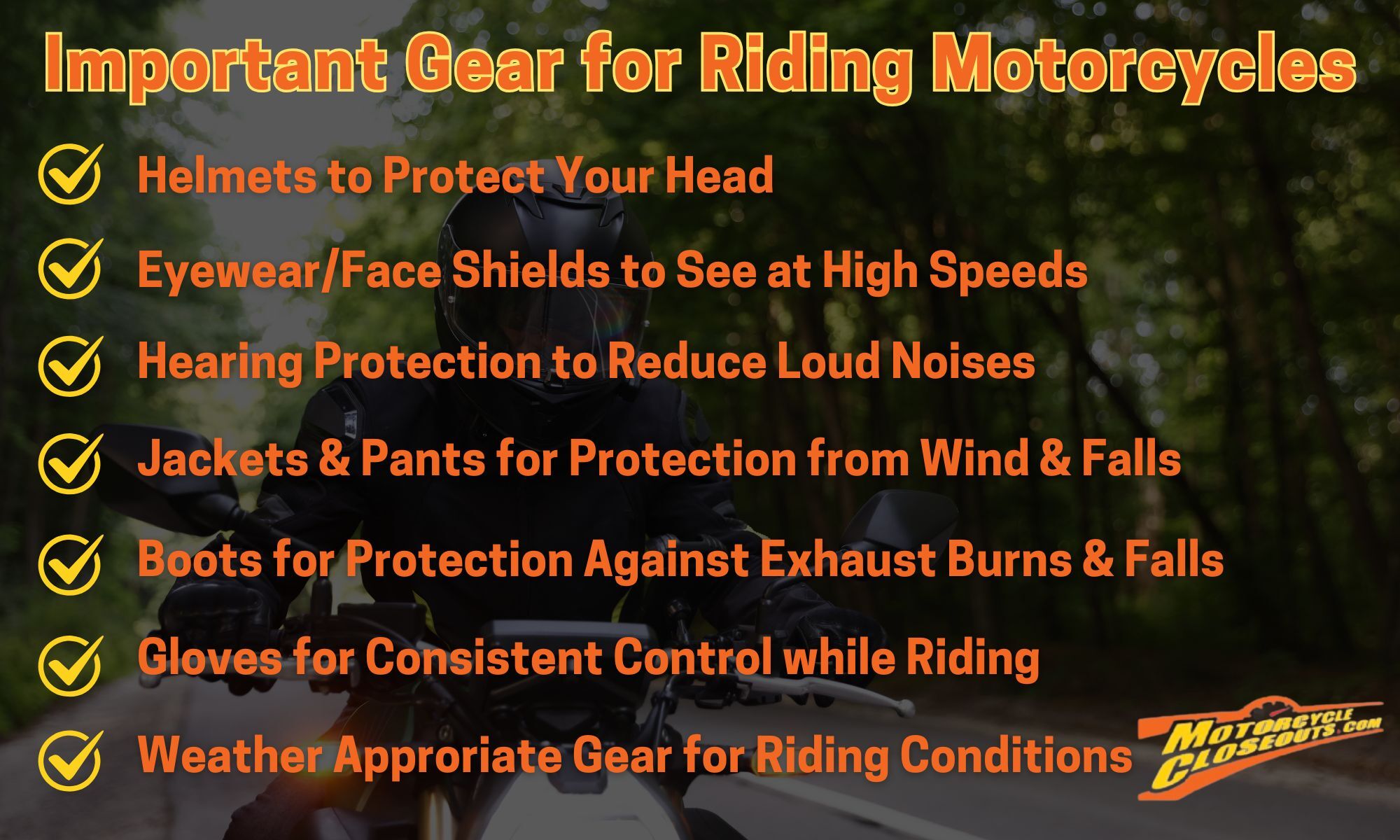
A DOT-approved helmet is a legal requirement in most states and the bare minimum for any responsible rider. The DOT certification means the helmet meets federal safety standards for impact protection and penetration resistance.
Full face helmets offer the highest level of protection, covering your entire head and chin. They're the top choice for highway riding and high-speed situations. Modular helmets give you the convenience of flipping up the chin bar when you're stopped, while still providing full coverage on the road. Open-face helmets protect the top and sides of your head but leave your face exposed, making a separate face shield or goggles necessary.
Sizing Tip: When fitting a helmet, it should feel snug without pressure points. A helmet that's too loose can shift during a crash and fail to protect you.
Face Shields and Eye Protection
Debris, bugs, wind, and sun glare can all impair your vision as you ride and lead to a serious motorcycle accident. A plastic shatter-resistant face shield built into your helmet is the most convenient option, but if you ride with an open-face helmet, goggles or riding glasses are a must.
Hearing Protection
Wind noise and loud engines at highway speeds can cause permanent hearing damage over time. Disposable foam plugs are cheap, effective, and easy to carry, and many experienced riders consider them just as important as a helmet.
Jackets, Pants, and Upper/Lower Body Protection
Motorcycle Jackets
A quality motorcycle jacket protects your upper body from abrasion, impact, and the elements. Leather jackets remain the gold standard for abrasion resistance and offer that classic rider look. Textile jackets are lighter, often waterproof, and work well across dynamic weather conditions and seasons. For hot weather riding, mesh jackets provide superior airflow while still offering more protection than every day clothing.
Tip: Look for jackets with CE-rated armor in the shoulders, elbows, and back. This armor absorbs impact energy during a crash and can prevent serious injuries to your spine and joints.
Motorcycle Pants
Your legs are just as vulnerable as your upper body in a slide. Regular jeans offer almost no protection and can shred in seconds on asphalt. Leather pants provide the best abrasion resistance, while armored textile pants offer a good balance of protection and comfort for everyday riding.
At minimum, always wear long pants. Shorts leave your skin completely exposed to road rash, burns from the exhaust, and debris.
Visibility
Reflective material on your jacket and pants makes a real difference, especially when riding during low-light conditions or at night. Being seen by other drivers is one of the simplest ways to avoid a motorcycle accident. Many riding jackets include reflective piping or panels, or you can add reflective patches to your existing gear.
Gloves, Boots, and Extremities
Motorcycle Gloves
Your hands are your main connection to the motorcycle, controlling the throttle, clutch, and brakes. Additionally, when you fall, your natural instinct is to put your hands out to catch yourself, which makes gloves more important than they might seem on the surface.
Leather gloves offer the best combination of durability, grip, and abrasion resistance. When shopping for gloves, look for these features:
- Knuckle armor or reinforced padding
- Double-stitched seams
- Palm sliders or reinforcement
- Secure wrist closure
- Touchscreen-compatible fingertips (for GPS and phone use)
Sizing Tip: Gloves that are too loose can bunch up and affect your grip, while gloves that are too tight restrict movement and blood flow.
Motorcycle Boots and Proper Footwear
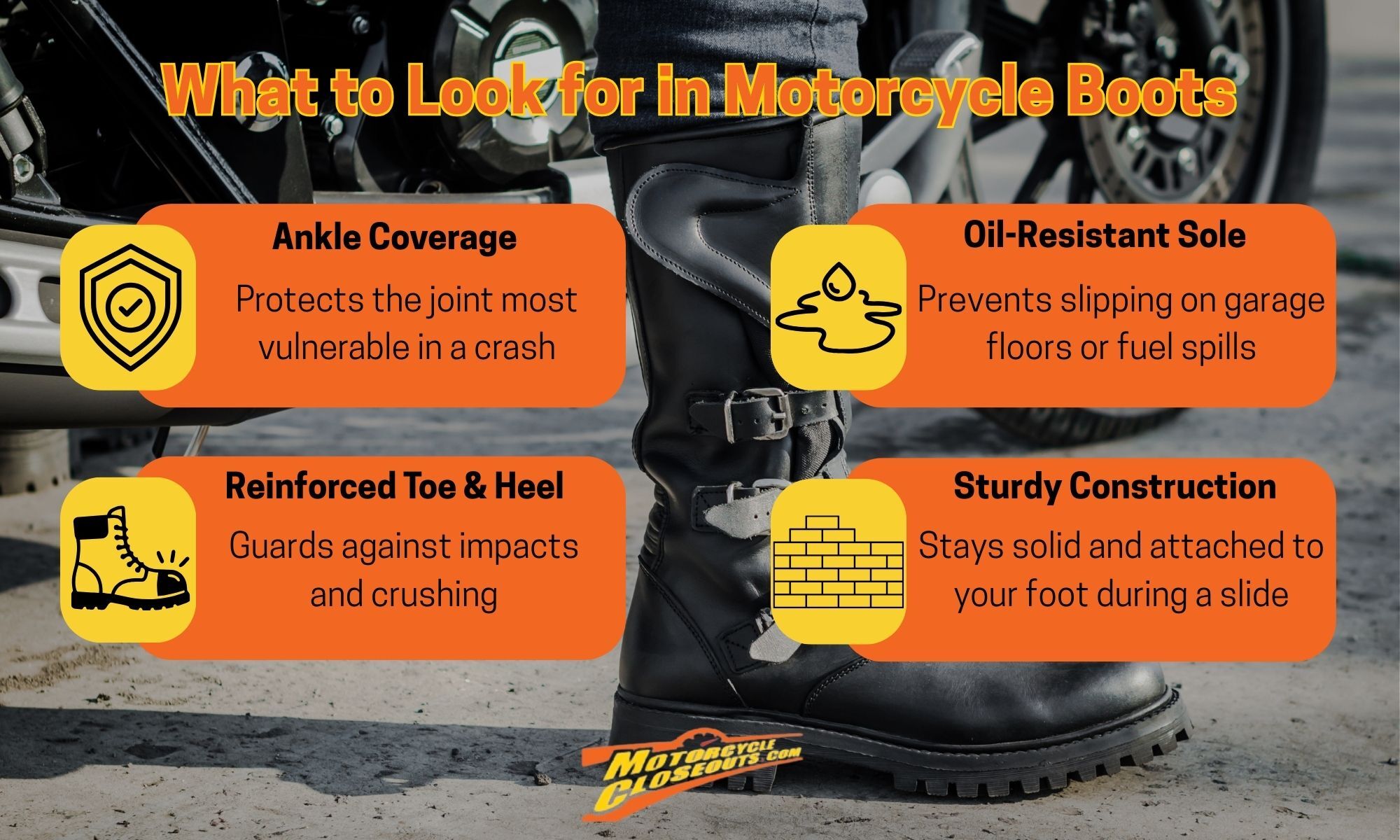
Ankle and foot injuries are among the most common in motorcycle accidents. Proper motorcycle boots cover your ankles and provide support that regular shoes simply can't match. Sneakers, sandals, and flip-flops offer virtually zero protection from impact, abrasion, or crushing injuries.
What to look for in motorcycle boots:
Adapting Your Gear to Weather Conditions
The right gear for a July afternoon looks very different from what you need on a cold November morning. Building a versatile riding wardrobe means you can hit the road comfortably in any season.
Hot Weather Riding
When temperatures climb, ventilation is your best friend. Mesh jackets and perforated leather allow airflow to keep you cool without sacrificing protection. Moisture-wicking fabrics in your base layer pull sweat away from your skin, helping regulate your body temperature. Light-colored gear also reflects heat better than black. Check out our guide to summer motorcycle gear for more tips.
Cold Weather Riding
Layering is the key to staying warm in cold weather. Start with a moisture-wicking base layer, add an insulating mid-layer, and finish with a windproof outer shell. Heated gear like vests, gloves, and jacket liners can make a huge difference on frigid rides. Don't forget to protect your neck and face with a balaclava or neck gaiter. For more details, read our winter motorcycle gear guide.
Wet Weather Riding
Waterproof riding gear or a rain suit worn over your regular gear keeps you dry and focused. Look for sealed seams and adjustable cuffs to prevent water from sneaking in. Visibility drops significantly in the rain, so reflective material and bright colors become even more important during daylight hours and beyond.
Gear Up and Ride with Confidence
Proper motorcycle gear isn't about looking the part. It's about making it home in one piece. Every piece of riding gear serves a purpose, from a DOT-approved helmet protecting your head to motorcycle boots keeping your ankles intact.
A responsible rider knows that the right gear:
- Reduces injury severity in a motorcycle accident
- Keeps you comfortable across all weather conditions
- Helps other drivers see you on the road
- Lets you focus on the ride instead of discomfort
At Motorcycle Closeouts, we stock helmets, jackets, gloves, pants, and boots from top brands at closeout prices. We're here to help you find the right fit, and our hassle-free returns make it easy if something doesn't work out.
Don't wait too long when you see gear you like because once the gear is gone, it's gone. Check out our current inventory and get yourself protected for your next ride.
Explore Popular Articles
The Best Motorcycle Helmet Audio System
Short Answer: The best motorcycle helmet audio system depends on how you ride. Bluetooth communicati...
How to Clean Motorcycle Helmet Pads
Keeping your helmet pads clean comes down to a few basics: warm water, mild soap, and a little time....
How to Winterize Your Motorcycle; Motorcycle Closeouts
Short Answer: Proper winter motorcycle storage starts with a few key steps: fill your gas tank and a...

What to Know When Riding in Cold Weather
Short Answer: Riding in cold weather takes extra preparation, the right gear, and awareness of how c...

Your Guide to Motorcycle & Motocross Eye Protection
Motorcycle riding offers a completely different experience than driving a car. Riders stay much more...

Motocross Helmet: Buyer's Guide
Safety Standards and Certifications That Matter MIPS Technology: Better Brain Protection Helmet Co...