
How to Get Your Motorcycle License: A Step-by-Step Guide for New Riders
Short Answer: Getting your motorcycle license takes three steps: passing a written knowledge test, practicing on a learner's permit, and passing a hands-on skills test. Most riders complete the process in a few weeks, and taking a Motorcycle Safety Foundation course can speed things up by waiving the final test in many states.
Earning your motorcycle license opens the door to legal riding on public streets. The process can feel confusing at first since every state handles things a little differently, but once you break it down, getting your motorcycle license is straightforward. This guide walks you through what to expect, how to prepare, and how to set yourself up for success on test day.
Why You Need a Motorcycle License
Riding a motorcycle without a valid license is both illegal and dangerous. A proper motorcycle endorsement on your driver's license proves you've passed both a knowledge test and a skills test. This confirms you understand the rules of the road and can handle a motorcycle safely. Riding unlicensed can also cost you. Most insurance companies won't cover a crash if the rider didn't hold a valid motorcycle license, and a traffic stop without proper licensing can lead to fines and points on your record. Most states require either:
- A motorcycle endorsement added to your existing driver's license, or
- A separate Class M license
Motorcycle Endorsement vs. Class M License
The two terms sound different but serve the same purpose: legal permission to ride. The difference is how your state classifies it.
- Motorcycle endorsement: Most states treat your motorcycle credential as an add-on to your existing driver's license, shown as an "M" or "MC" code on the card.
- Class M license: Some states treat motorcycle privileges as a separate license class rather than as an endorsement. It still appears on the same driver's license card, just labeled as its own class.
Either way, the same general steps apply to get one. Check your state's DMV website to see which term applies where you live.
What to Expect From the Process
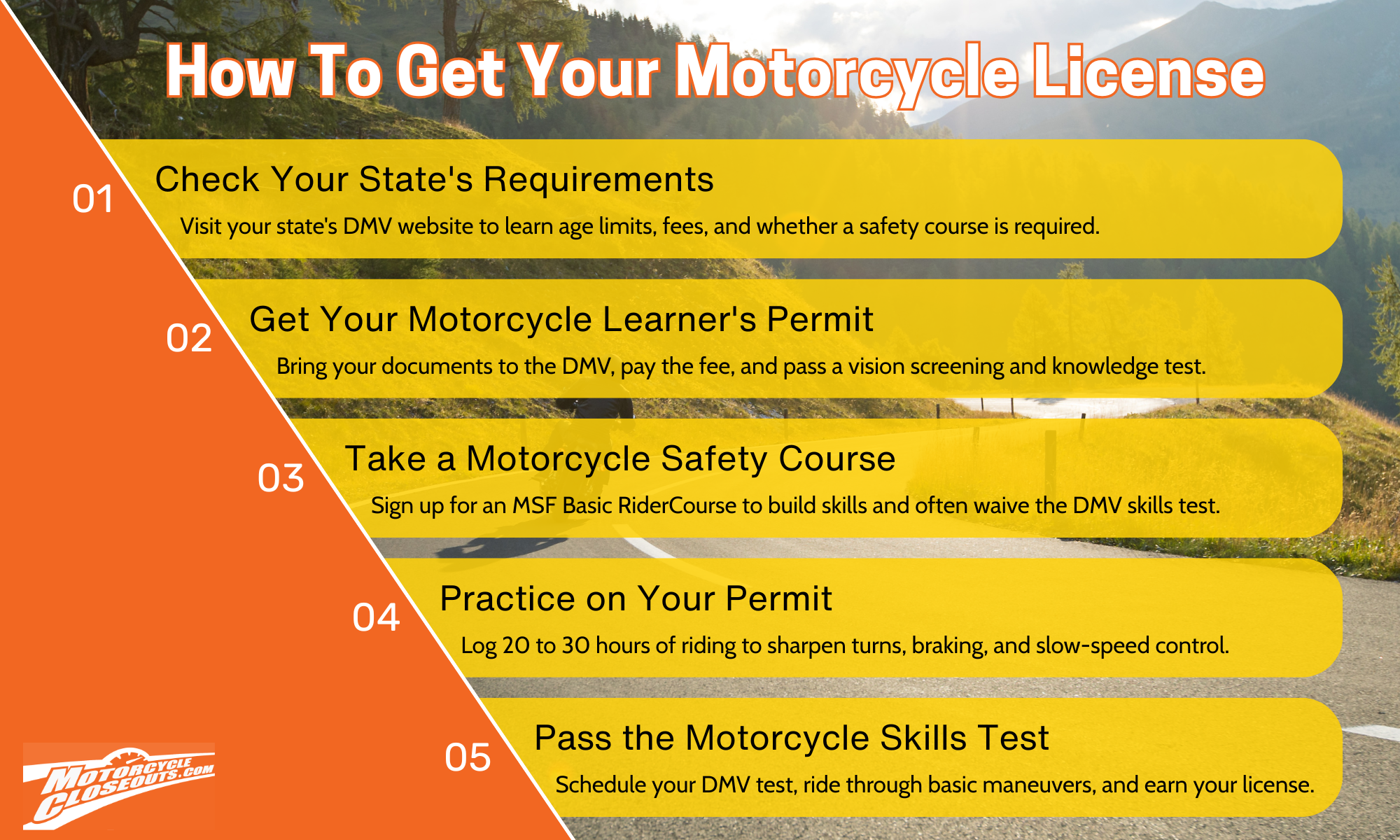
The licensing process looks a little different in every state, but the basic path is the same. You'll start with a permit, build up your skills, and finish with a road-ready license. Most riders move through this process in a few weeks, though timelines depend on your state, your schedule, and how quickly you can book a test.
Step 1: Check Your State's Requirements
Every state's DMV has its own rules, age limits, and fees. Visit your state's DMV website and search for motorcycle licensing. You'll find a downloadable motorcycle operator manual covering everything you need to know for the knowledge test. Some states require a motorcycle safety course for younger riders. In other states, completing a safety course is optional, but it lets you skip the skills test at the DMV. Knowing your state's specifics up front saves time later.
Step 2: Get Your Motorcycle Learner's Permit
A motorcycle learner's permit lets you practice riding before you take the full skills test. Most states set the minimum age at 15 or 16, and riders under 18 typically need consent from a parent or legal guardian.
Bring these to your local DMV:
- Proof of identity (passport, birth certificate, or current ID)
- Proof of residency (utility bill, lease, etc.)
- Social Security number
- Guardian consent form if you're under 18
- Payment for the permit fee
At the DMV, you will:
- Submit a completed application
- Pass a vision test
- Pass a motorcycle knowledge test
What's on the Motorcycle Knowledge Test?
The written test covers material from your state's motorcycle operator manual.
Expect questions on:
- Traffic laws and right-of-way rules
- Safe riding practices
- How to handle hazards on the road
- Required eye protection and gear
- Lane positioning and signaling
Restrictions on a Learner's Permit
Most permits limit when and where you can ride.
Common restrictions include:
- No passengers
- Riding only during daylight hours
- No highway or interstate riding
- Wearing eye protection at all times
A valid motorcycle learner's permit usually lasts six months to a year, giving you time to practice before moving on to your full motorcycle license.
Step 3: Take a Motorcycle Safety Course
Taking a motorcycle safety course is one of the smartest moves a new rider can make. The Motorcycle Safety Foundation (MSF) offers the Basic RiderCourse, which is recognized by most states as part of their motorcycle safety program. Many states will waive the skills test entirely once you finish, since the course already covers everything the test would. Courses typically run $200 to $400 and fill up fast in spring and summer. You can find an approved course near you through the MSF website, your state's motorcycle safety program, or community colleges and dealerships that host classes.
What You'll Learn in a Basic Rider Course
The MSF Basic RiderCourse usually runs over a weekend and includes both classroom learning and hands-on riding practice. You'll cover:
- Motorcycle controls and operation
- Starting, stopping, and shifting
- Turning and swerving
- Emergency braking
- Hazard awareness for motorcycle operators
Most courses provide a motorcycle and helmet for the hands-on portion, so you don't need to own a bike yet. Successful completion of the course earns you a completion card or certificate, which you can bring to the DMV.
Even if your state doesn't require the course for a motorcycle license, it's still worth taking. You'll get hands-on practice from certified instructors, build confidence faster, and often qualify for an insurance discount.
Step 4: Practice on Your Permit
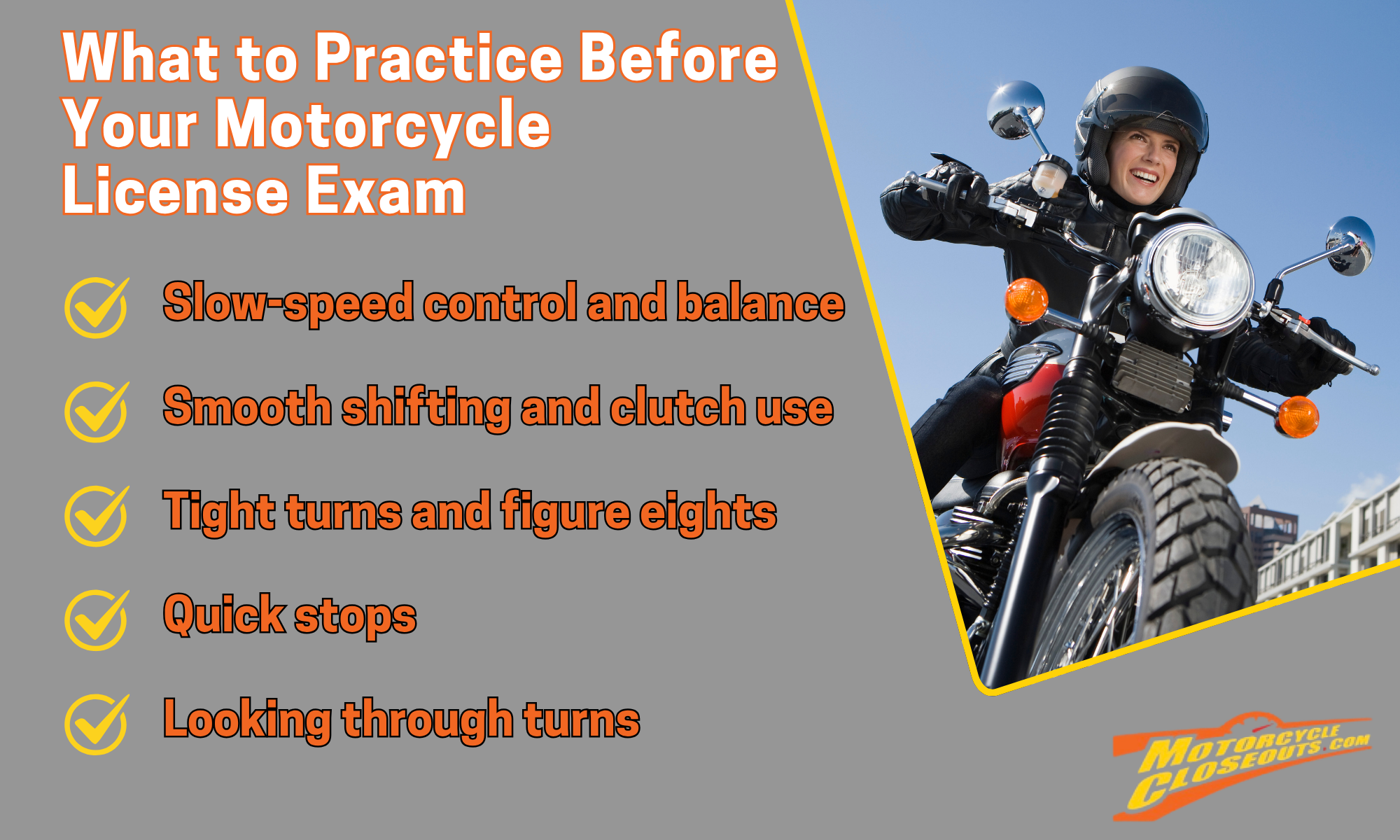
While your motorcycle learner's permit is valid, get as much seat time as you can. Practice in empty parking lots and low-traffic neighborhoods first, where the risk of injury is lower. Focus on slow-speed control and balance, since that's where most drops happen. Get comfortable with smooth shifting and clutch use, because jerky inputs throw off your balance. Work on tight turns, figure eights, and quick stops to build the muscle memory you'll lean on during the skills test. Always look through your turns, not at the front tire, because your bike goes where your eyes go.
The more comfortable you get, the better you'll perform on your skills test. Aim for at least 20 to 30 hours on your permit before scheduling, and ride with a more experienced rider when possible to catch bad habits early. Most states also require a minimum hold period before you can test, ranging from no wait at all (often with a safety course) to 9 months for riders under 18. Check your state's rules so you know how soon you can test.
Step 5: Pass the Motorcycle Skills Test
If you didn't take a safety course (or your state still requires the skills test even after one), this is the final step. Schedule your test at the DMV when you feel ready. This is the part where you actually ride a motorcycle in front of an examiner. The test usually takes place in a controlled area, such as a parking lot, and you'll be scored on basic riding maneuvers. Plan for the whole appointment to take about 30 to 45 minutes, though wait times can stretch longer. Show up early, bring your motorcycle learner's permit, registration, proof of insurance, and any test fees required. Wear your full gear, not just the legal minimum.
Common Skills Test Maneuvers
- Slow, controlled riding through a marked path
- A sharp U-turn within a set boundary
- A swerve to avoid a simulated obstacle
- A quick stop at a set speed
You'll need to bring your own motorcycle (or borrow one), and it must be street-legal and properly registered. You also need to wear approved eye protection and follow your state's helmet laws.
Pass, and that's it! You've earned your motorcycle endorsement and you're cleared to ride.
Special Cases: Scooters, Mopeds, and 3-Wheel Motorcycles
Different vehicles come with different licensing rules. Here's how a few common ones break down:
- Motor scooters and motor-driven cycles: Some states classify these separately and may only require a regular driver's license to operate.
- Mopeds: Often need only a basic permit or no special license at all.
- 3-wheel motorcycles: May require a specific 3-wheel endorsement rather than a standard motorcycle license.
Tips for Passing Your Tests the First Time
Both the written test and the skills test are passable with the right prep. A few pointers:
- Read the motorcycle operator manual cover to cover.
- Take practice knowledge tests online. Most state DMVs offer free sample questions.
- Get plenty of saddle time on your permit.
- Take the MSF Basic RiderCourse, even if it isn't required.

Gear Up and Hit the Road
Getting your motorcycle license takes time, but it makes every mile after worth the effort. Once you're licensed, the next step is quality gear: a DOT-approved helmet, eye protection, a protective jacket with armor, riding gloves, long pants, and over-the-ankle motorcycle boots are basics every new rider should own before that first solo ride.
At MotorcycleCloseouts, we carry first-quality gear from top brands at 30% to 50% off retail, all backed by full manufacturer warranties and easy returns. Browse our current deals or contact our rider support team. We're real motorcycle riders ourselves, and we're happy to help you find gear that fits your style, your budget, and your ride.
Explore Popular Articles
How to Get Your Motorcycle License: A Step-by-Step Guide for New Riders
Short Answer: Getting your motorcycle license takes three steps: passing a written knowledge test, p...

Everything You Need Before Your First Ride
Short Answer: Getting ready for your first motorcycle ride means lining up a few things before you t...
The Best Motorcycle Helmet Audio System
Short Answer: The best motorcycle helmet audio system depends on how you ride. Bluetooth communicati...
How to Clean Motorcycle Helmet Pads
Keeping your helmet pads clean comes down to a few basics: warm water, mild soap, and a little time....
How to Winterize Your Motorcycle; Motorcycle Closeouts
Short Answer: Proper winter motorcycle storage starts with a few key steps: fill your gas tank and a...

What to Know When Riding in Cold Weather
Short Answer: Riding in cold weather takes extra preparation, the right gear, and awareness of how c...