
How Dangerous Are Motorcycles, and How Much Does Gear Reduce the Risk?
Short Answer: Riding a motorcycle is significantly more dangerous than driving a car. The good news is that the biggest risk factors are the ones you control: your gear, your training, your speed, and your decisions in traffic. Owning the proper protective gear sharply cuts the odds of severe injuries and hospitalization. Let's look at what the numbers actually say on the dangers of riding, then break down how much protective gear cuts the risk.
How Dangerous Are Motorcycles, Really?
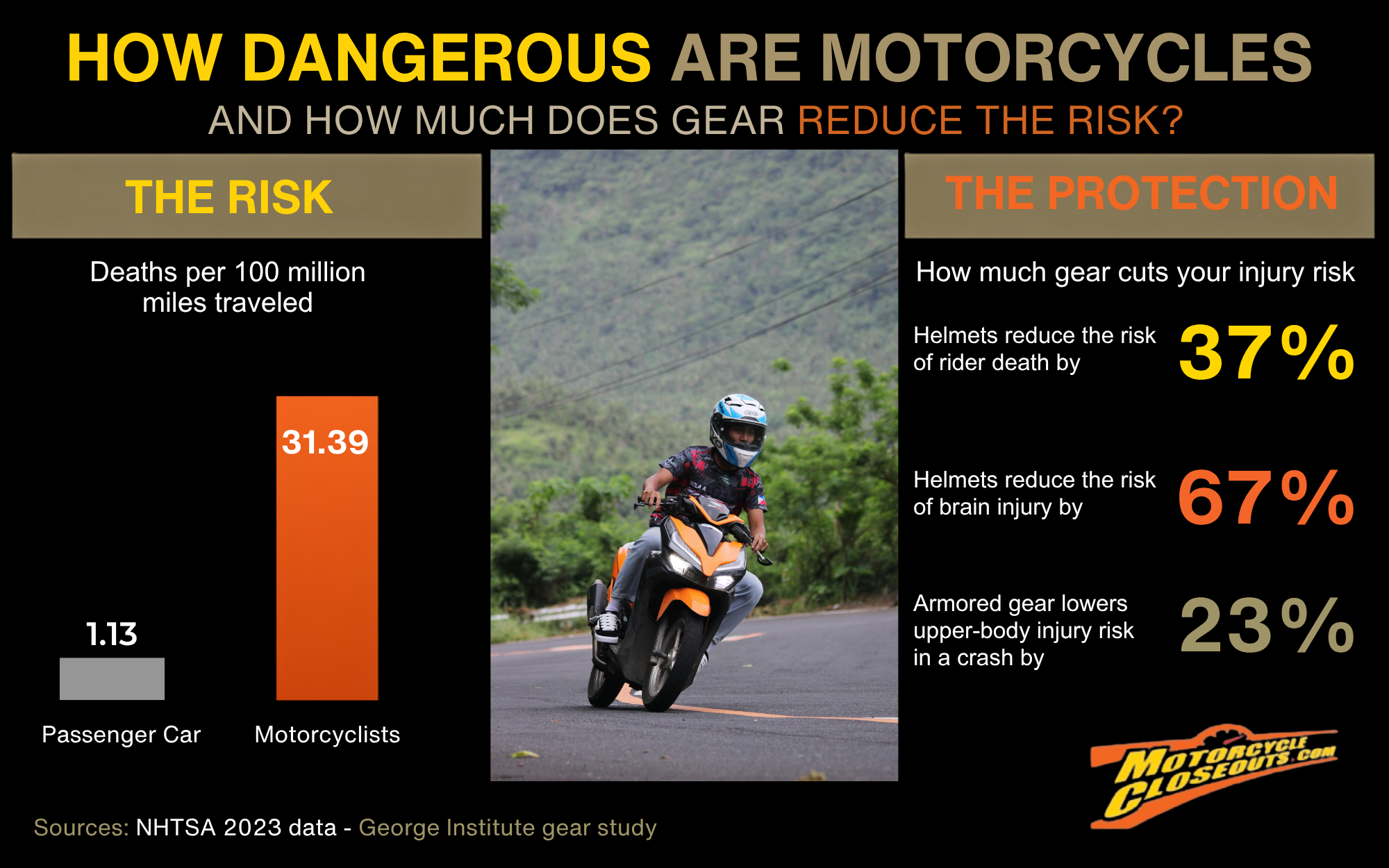
The clearest way to compare the risk between riding in a car and on a motorcycle is through deaths per mile traveled. On that measure, the gap is wide. NHTSA's 2023 data records 31.39 motorcyclist deaths per 100 million miles traveled, compared to 1.13 for passenger car occupants. This means motorcyclists die at almost 28 times the rate of people in cars.
A few more figures fill in the picture:
- 6,335 motorcyclists were killed in the United States in 2023, according to NHTSA.
- Motorcyclists made up about 15% of all U.S. traffic fatalities.
- Head injury is a leading cause of death in motorcycle fatalities.
Those numbers sound grim, and they are, but they describe the whole riding population, including riders who skipped training, rode impaired, or wore no protective gear at all. Most motorcycle deaths involve a mix of factors rather than one single cause, and many trace back to habits a rider could have changed. Your personal risk is not a fixed number. It shifts based on the choices you make before you ever start the engine.
Why Motorcycles Are More Dangerous Than Cars
A passenger car gives you the protection of a steel cage with crumple zones, airbags, and seat belts. A motorcycle gives you none of that. When a motorcycle accident happens, the rider can make direct contact with the pavement, another vehicle, or a fixed object. That single difference explains most of the fatality gap.
Many traffic accidents involving motorcycles come down to other people on the road. Inattentive drivers who turn left across your path or roll through traffic lights cause a large share of these crashes. You cannot control other drivers, but you can respect the speed limit, follow traffic laws, adjust for road conditions, and purchase the proper protective gear to reduce your risk. None of these steps make riding risk-free, but each one shifts the odds in your favor. The proper gear puts a real barrier between you and the pavement in a crash, so it is worth understanding exactly how much protection each piece adds.
How Much Does Protective Gear Reduce the Risk?
Gear will not stop a crash from happening, but it changes what that crash does to your body. The research on this is consistent and decades deep.
Helmets and Head Protection
The motorcycle helmet is the single most studied piece of safety gear. NHTSA estimates that helmets are about 37% effective at preventing rider death and about 67% effective at preventing brain injuries. IIHS reports the same effectiveness range and notes that unhelmeted riders are roughly three times more likely to suffer a traumatic brain injury than helmeted ones.
An important distinction to make is that not every helmet earns these numbers. A DOT-approved full-face helmet gives you the most coverage, whereas novelty helmets that do not meet federal standards leave you far more exposed. The label matters as much as the fit.
Jackets, Gloves, Boots, and Pants
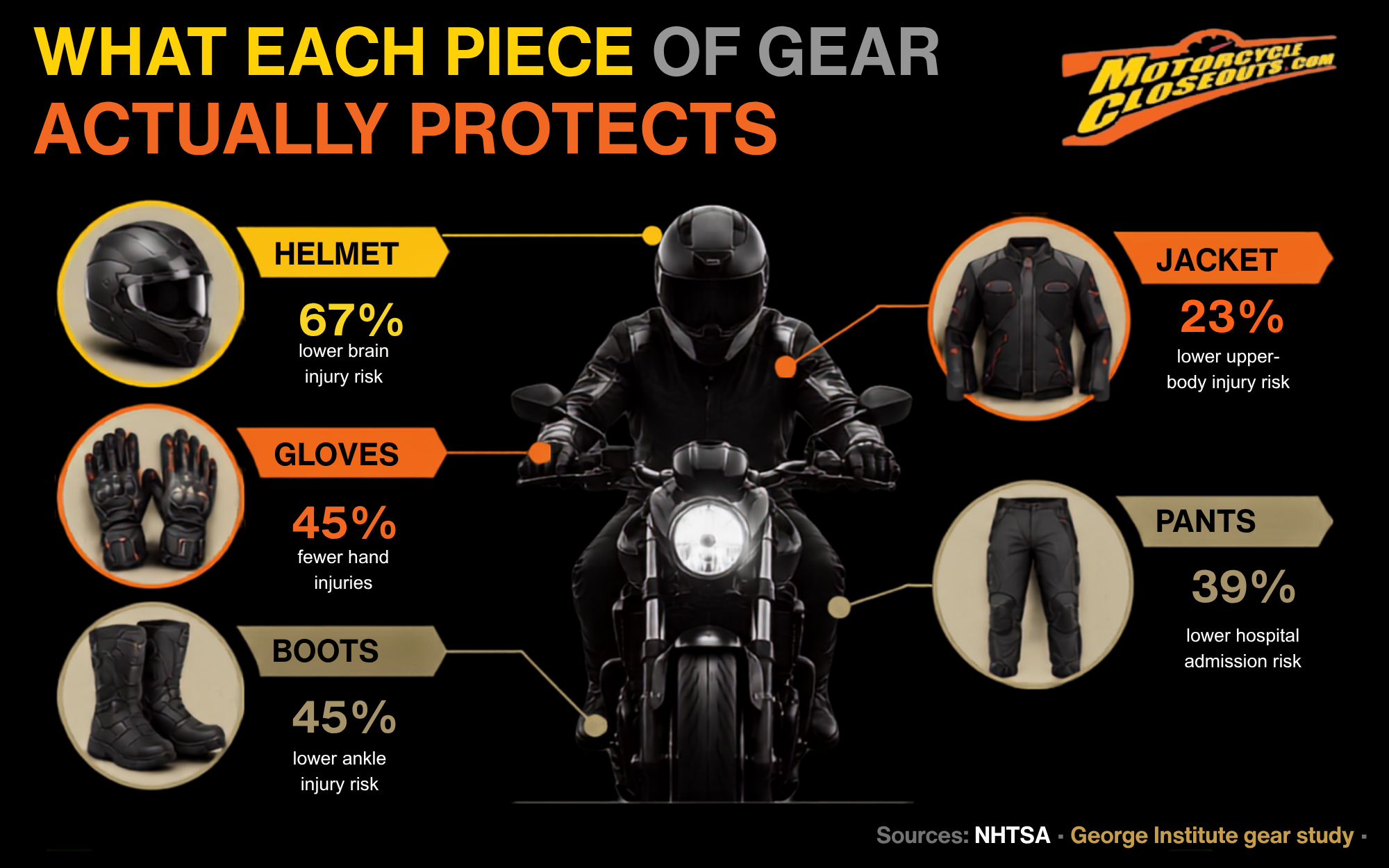
Riders are significantly less likely to be admitted to a hospital when they crash wearing motorcycle jackets, pants, or gloves.
Here is what a full protective setup covers:
- Jacket: Abrasion resistance plus CE-rated armor at the shoulders, elbows, and back.
- Gloves: Knuckle armor and reinforced protection for hands when you instinctively put them down in a fall.
- Riding pants: Reinforced panels or armor instead of bare denim.
- Boots: Over-the-ankle support and a solid sole.
The protection level inside that gear matters too. If you are weighing your options, our breakdown of CE Level 1 vs Level 2 armor explains how much force each rating lets through and which one fits your riding style.
Putting the Risk in Perspective
Motorcycles are dangerous, but proper gear and good habits stack the deck in your favor. A trained rider in a full-face helmet and armored gear faces a very different risk profile than the overall statistics suggest.
The riders who get hurt the worst are usually missing these protections, and that is where the most severe injuries come from. You do not have to be one of them. Planning and budgeting for good gear matters just as much as planning for the bike itself, if not more.
Check out our guide on motorcycle safety tips to keep a mistake from becoming a fatal accident.
Smart Habits That Keep You Safer
Gear protects you when a crash happens, but good habits help you avoid one in the first place. A few motorcycle safety tips go a long way toward keeping the odds in your favor every time you ride.
- Take a rider training course: Even seasoned riders can sharpen their braking and cornering, and many insurers offer a discount for completing one.
- Ride like you are invisible: Assume drivers do not see you, cover your brakes near traffic lights and intersections, and watch the front wheels of waiting cars for the first sign of movement.
- Keep space around you: A cushion of following distance gives you time to react when someone stops short or changes lanes without looking.
- Match your speed to the road: High speed shortens your reaction time and lengthens your stopping distance, so ease off when traffic, weather, or road conditions are not safe.
- Skip the ride when you are impaired: Never ride if you are impaired by alcohol, fatigue, or simply distracted.
- Do a quick pre-ride check: Look over your tires, brakes, lights, and chain before you roll out. A small problem caught in the driveway beats a breakdown on the highway.
- Stay visible: Bright or reflective gear and daytime headlights help other road users spot you sooner.
These habits do not remove every risk, but stacked together, they make you a safer, sharper rider. Pair them with the right gear, and you give yourself the best shot at a long riding life.
Gear Up Before Your Next Ride
You cannot control every hazard on the road, but you can control what stands between you and the pavement. That is the part of the motorcycle riding risk equation that is fully in your hands.
At Motorcycle Closeouts, we carry DOT-approved helmets, armored jackets, gloves, boots, and riding pants from top brands at 30% to 50% off retail. Closeout gear is not lower quality, it is simply last season's styles, colors, and models, so you get the same protection for a lot less. Every item is first-quality and backed by a full manufacturer warranty, so you never trade safety for savings. Our staff are real riders, and they are happy to help you match gear to how and where you ride. Browse our current deals online and reach out to our rider support team to get your questions answered.
Our deals move fast, so grab your protection while it is still here.
Explore Popular Articles
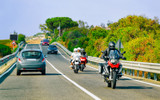
How Dangerous Are Motorcycles, and How Much Does Gear Reduce the Risk?
Short Answer: Riding a motorcycle is significantly more dangerous than driving a car. The good news...

How Much Does It Cost to Buy & Ride a Motorcycle?
Short answer: A newer rider can often get started for about $6,000 to $12,000 when they include the...
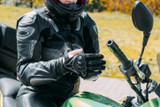
CE Level 1 vs Level 2 Armor Explained
Short Answer: Both CE Level 1 and Level 2 armor pass European safety tests for impact protection. T...

What to Bring on a Motorcycle Road Trip
Short Answer: For a motorcycle road trip, pack your protective gear (helmet, jacket, gloves, boots,...
How to Get Your Motorcycle License: A Step-by-Step Guide for New Riders
Short Answer: Getting your motorcycle license takes three steps: passing a written knowledge test, p...

Everything You Need Before Your First Ride
Short Answer: Getting ready for your first motorcycle ride means lining up a few things before you t...