
How Much Does It Cost to Buy & Ride a Motorcycle?
Short answer: A newer rider can often get started for about $6,000 to $12,000 when they include the motorcycle, safety gear, licensing, insurance, and registration. Your real total depends on the type of bike, whether you buy new or used, your zip code, and how much protective riding gear you need.
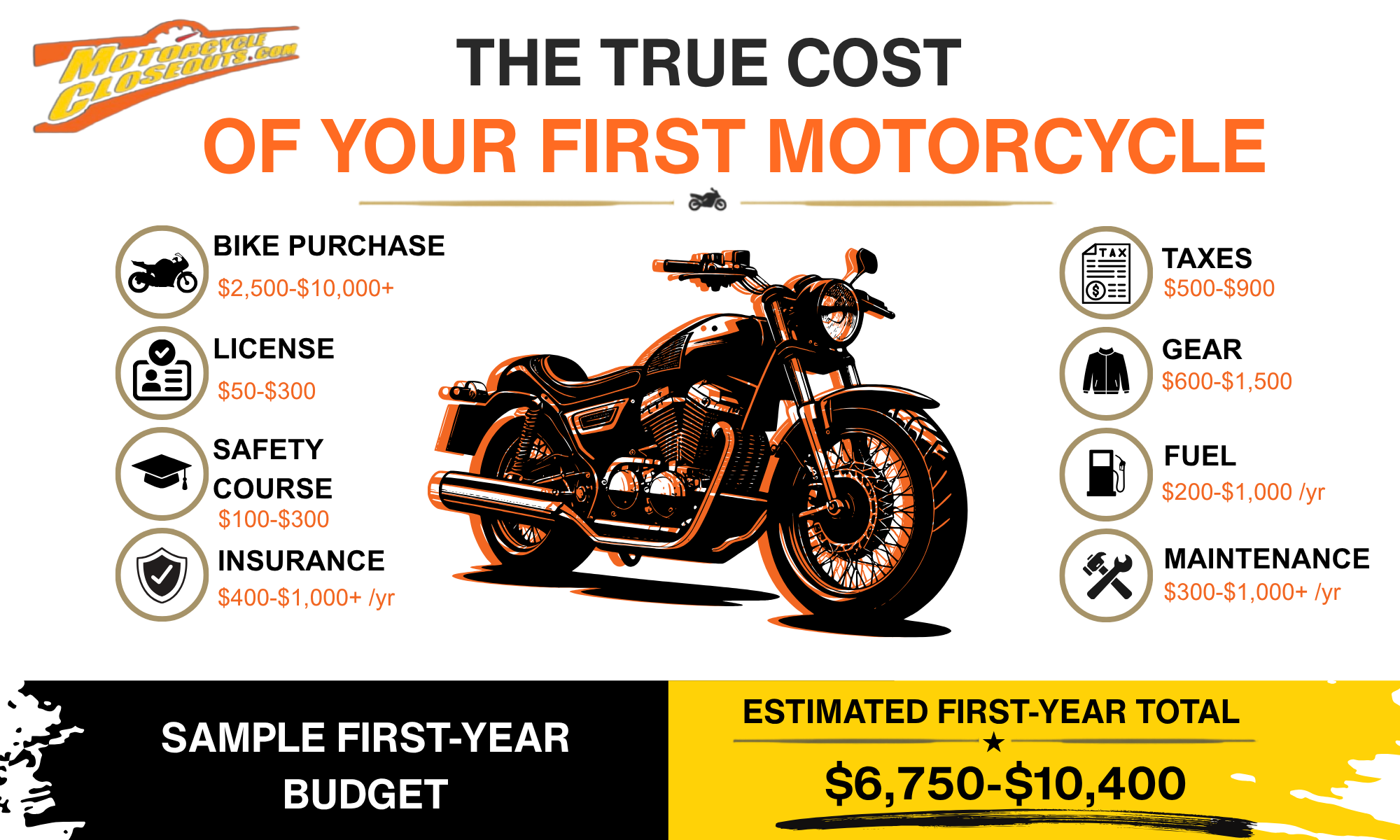
The sticker price is only part of the motorcycle cost. Before you hit the open road, plan for sales tax, registration fees, a motorcycle license or endorsement, insurance, maintenance, fuel costs, and gear. Planning for those costs early helps you buy a bike you can enjoy without surprises.
The Cost of the Motorcycle
A used motorcycle is usually the most affordable way to begin riding. A clean used bike can cost a few thousand dollars, while a new bike may start around $5,000 and climb far higher depending on the model, engine size, features, and brand.
| Type of bike | Typical purchase range | Good fit for |
| Used beginner bike | $2,500–$6,000 | Newer riders who want to keep the first purchase lower |
| New beginner bike | $5,000–$10,000 | Riders who want a warranty and current features |
| Cruiser motorcycle | $7,000–$20,000+ | Relaxed riding and longer rides |
| Sport bike or touring bike | $10,000–$30,000+ | Riders who want performance, comfort, or advanced features |
| Premium and custom motorcycles | $20,000+ | Experienced riders with a larger budget |
These are broad planning ranges, not fixed prices. A motorcycle’s final cost can change quickly once a dealer adds freight, setup, documentation, or other additional fees. Ask for an out-the-door price before using a credit card, financing a new motorcycle, or signing paperwork.
New Bike vs. Used Bike
A new bike gives you a factory warranty, fresh tires, and the latest models. It also usually comes with a higher price, sales tax, and dealer fees.
A used bike may save you thousands up front. Still, inspect it carefully or bring along an experienced rider. Check the tire date codes, chain or belt condition, brakes, fluids, lights, fuel tank, service records, title, and VIN. A cheap used motorcycle can become expensive if it needs tires, brakes, battery work, or major maintenance right away.
Costs Before Your First Ride
You need more than a motorcycle and a driver’s license to ride legally and safely. Exact requirements vary by state, so check your state motor vehicle agency before you buy.
Motorcycle License and Training
In addition to a learner’s permit, written test, and riding skills test, a Motorcycle Safety Foundation Basic Rider Course is a smart expense for any newer rider. Course fees vary by location, and many states waive the on-bike license test after successful completion. Some insurance companies may also offer a discount to riders who complete a course.
Registration, Title, and Sales Tax
After you buy a bike, your state may charge:
- Sales tax based on the purchase price
- Title fees
- Registration fees
- License plate fees
- Local taxes or other additional fees
Registration fees differ widely by state. Do not assume the motorcycle’s listed price is the total you will pay. Ask the seller or dealer for a written breakdown that includes every required charge.
Motorcycle Gear Budget
A motorcycle helmet and protective riding gear should be part of the purchase plan, not an afterthought. A motorcycle accident can happen close to home, at low speed, or on a quick trip to the store.
At minimum, plan for:
- A DOT-approved motorcycle helmet
- A protective motorcycle jacket
- Motorcycle gloves
- Riding pants or reinforced jeans
- Over-the-ankle motorcycle boots
- Eye protection if your helmet does not include a face shield
- Rain gear, cold-weather layers, or heated gear when needed
Your first gear setup might cost several hundred dollars, but closeout gear can make a major difference. Motorcycle Closeouts carries first-quality, warrantied gear from recognized brands at prices often well below retail.
If you are building your gear list, start with our guide on what to wear on a motorcycle. It breaks down the job of each piece of gear and helps you prioritize your budget.
Ongoing Motorcycle Costs
Buying the bike is the first expense. Keeping it safe, legal, and ready to ride is where the ongoing motorcycle costs come in.
Motorcycle Insurance Cost
Motorcycle insurance cost depends on your age, riding record, type of bike, location, coverage choices, and insurance company. A newer rider with a high-performance bike may pay more than an experienced rider with a smaller cruiser motorcycle.
Most states require liability insurance. Liability coverage may help pay for another person’s injury or property damage when you are at fault in an accident. You may also choose:
- Collision coverage for damage to your own bike after a crash
- Comprehensive coverage for theft, fire, weather damage, vandalism, and other non-collision losses
- Uninsured or underinsured motorist coverage
- Medical payments coverage
- Roadside assistance
Get quotes before buying a motorcycle, especially if you are considering a sport bike or a model with a higher price. Give insurers the exact year, make, model, and your zip code for a more useful estimate.
Fuel Costs
Fuel costs depend on how far you ride, fuel tank size, fuel grade, local gas prices, and the motorcycle’s fuel economy. A small commuter bike can use far less fuel than a large touring bike carrying luggage over long distances.
You can keep fuel spending lower by maintaining proper tire pressure, using the recommended fuel, keeping the bike serviced, and riding smoothly. Still, gas is rarely the only operating cost that catches new riders off guard.
Maintenance Costs
Maintenance costs vary by motorcycle, mileage, and whether you do basic work yourself. Plan for regular oil and filter changes, tire maintenance, brake pad maintenance, chain care, and scheduled inspections.
Tires can be one of the larger recurring expenses. A bike may use a rear tire faster than expected, especially with aggressive riding, heavier loads, or lots of highway miles. Check the owner’s manual for service intervals and set aside money each month for upcoming work.
A simple annual budget could look like this:
| Expense | Estimated yearly planning range |
| Motorcycle insurance | $200–$1,500+ |
| Fuel costs | $200–$1,000+ |
| Routine maintenance | $300–$1,000+ |
| Registration and license plate renewal | Varies by state |
| Tires, battery, and unexpected repairs | $200–$1,000+ |
Your actual cost may be lower or higher. A rider who takes short local trips on a small bike will usually spend less than someone who rides long distances on a large motorcycle.
A Realistic First-Year Budget
Here is a sample budget for a newer rider buying a used bike:
| First-year item | Example cost |
| Used motorcycle | $4,500 |
| Sales tax, title, registration fees, and license plate | $500–$900 |
| Motorcycle endorsement and safety course | $150–$500 |
| Motorcycle insurance | $400–$1,000 |
| Helmet, jacket, gloves, pants, and boots | $600–$1,500 |
| Fuel and maintenance | $600–$1,500 |
| Estimated first-year total |
$6,750–$10,400 |
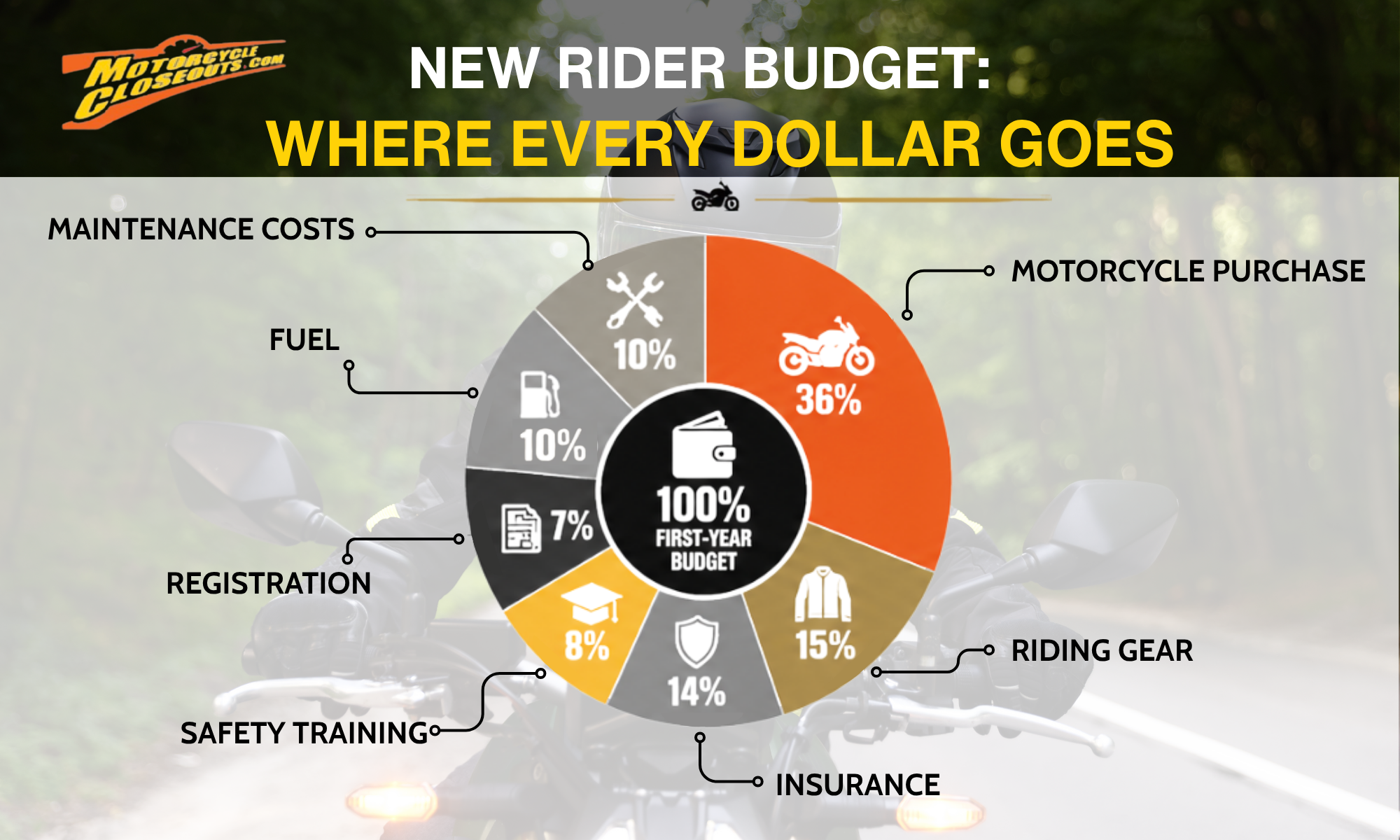
This is why it helps to avoid spending every dollar on the bike itself. A $5,000 motorcycle with quality gear, insurance, and money set aside for maintenance is often a better first purchase than an $8,000 bike that leaves no room for protection or repairs.
Save Money Without Cutting Corners
The goal is not to buy the cheapest item available. The goal is to spend wisely on the things that matter most.
- Start with a motorcycle that matches your current riding skills.
- Price insurance before you purchase the bike.
- Take a motorcycle safety course before riding alone.
- Buy a DOT-approved motorcycle helmet that fits correctly.
- Look for closeout deals on first-quality, warranty-backed riding gear.
- Keep up with oil changes, tire inspections, and brake service.
- Avoid skipping gear just to afford a newer or bigger bike.
- Set aside money for unexpected maintenance costs.
Get Ready to Ride
So, how much does a motorcycle cost? For many riders, the honest answer is more than the sticker price but still manageable with a clear budget. Plan for the bike, motorcycle endorsement, insurance, registration fees, fuel, maintenance, and gear before you buy.
Your gear is one area where you can save without giving up quality. Browse Motorcycle Closeouts for discounted street helmets, motorcycle jackets, gloves, boots, and more. Our team is made up of riders who can help you find the right gear and fit for your budget. First-quality closeouts move fast, so check the current deals before your next ride.
Explore Popular Articles
How Dangerous Are Motorcycles, and How Much Does Gear Reduce the Risk?
Short Answer: Riding a motorcycle is significantly more dangerous than driving a car. The good news...
How Much Does It Cost to Buy & Ride a Motorcycle?
Short answer: A newer rider can often get started for about $6,000 to $12,000 when they include the...
CE Level 1 vs Level 2 Armor Explained
Short Answer: Both CE Level 1 and Level 2 armor pass European safety tests for impact protection. T...
What to Bring on a Motorcycle Road Trip
Short Answer: For a motorcycle road trip, pack your protective gear (helmet, jacket, gloves, boots,...
How to Get Your Motorcycle License: A Step-by-Step Guide for New Riders
Short Answer: Getting your motorcycle license takes three steps: passing a written knowledge test, p...
Everything You Need Before Your First Ride
Short Answer: Getting ready for your first motorcycle ride means lining up a few things before you t...