
What Shoes Should You Wear on a Motorcycle? A Rider’s Guide to Proper Footwear
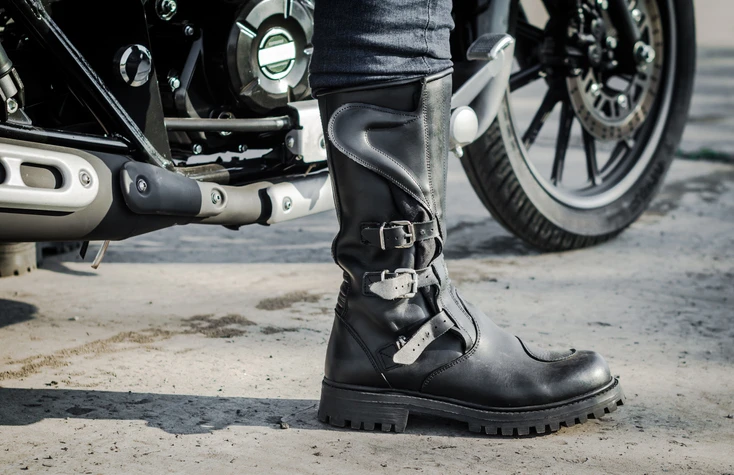
What Shoes Should You Wear on a Motorcycle? A Rider’s Guide to Proper Footwear
Short Answer: For the best protection, wear over-the-ankle motorcycle boots or a dedicated riding shoe built with abrasion resistance, ankle support, a reinforced toe and heel, and a grippy sole. Tennis shoes, sandals, and most work boots come apart in a slide and offer almost no impact protection. A motorcycle sneaker handles short trips and commuting well, while touring, adventure, and off-road boots give you more coverage on longer or rougher rides.
Your feet work harder than almost any other part of your body on a bike. They hold the weight of the machine at every stoplight, operate the shifter and the rear brake, and they are usually the first thing to touch pavement when something goes wrong. The shoe you put on before a ride affects both how well you control the bike and how well you can walk away from an accident.
Why Footwear Matters
A motorcycle crash does not have to happen at highway speed to wreck a foot. A low-speed tip-over in a parking lot can pin an ankle under 400 pounds of metal. A slide at 35 mph can drag your foot across asphalt. Canvas and foam soles on a pair of non-motorcycle shoes, give out in under a second during an accident.
The proper shoes also give you better control of the bike. A stiff sole keeps your foot planted on the peg instead of flexing over it, which means cleaner shifts and better feel on the rear brake. A sole with real grip also holds the pavement better when you put a foot down.
What Separates a Riding Shoe From a Regular Shoe
Real motorcycle footwear has specific jobs that a casual shoe never has to do. The differences show up in height, materials, structure, and sole, and they are easy to spot once you know where to look.
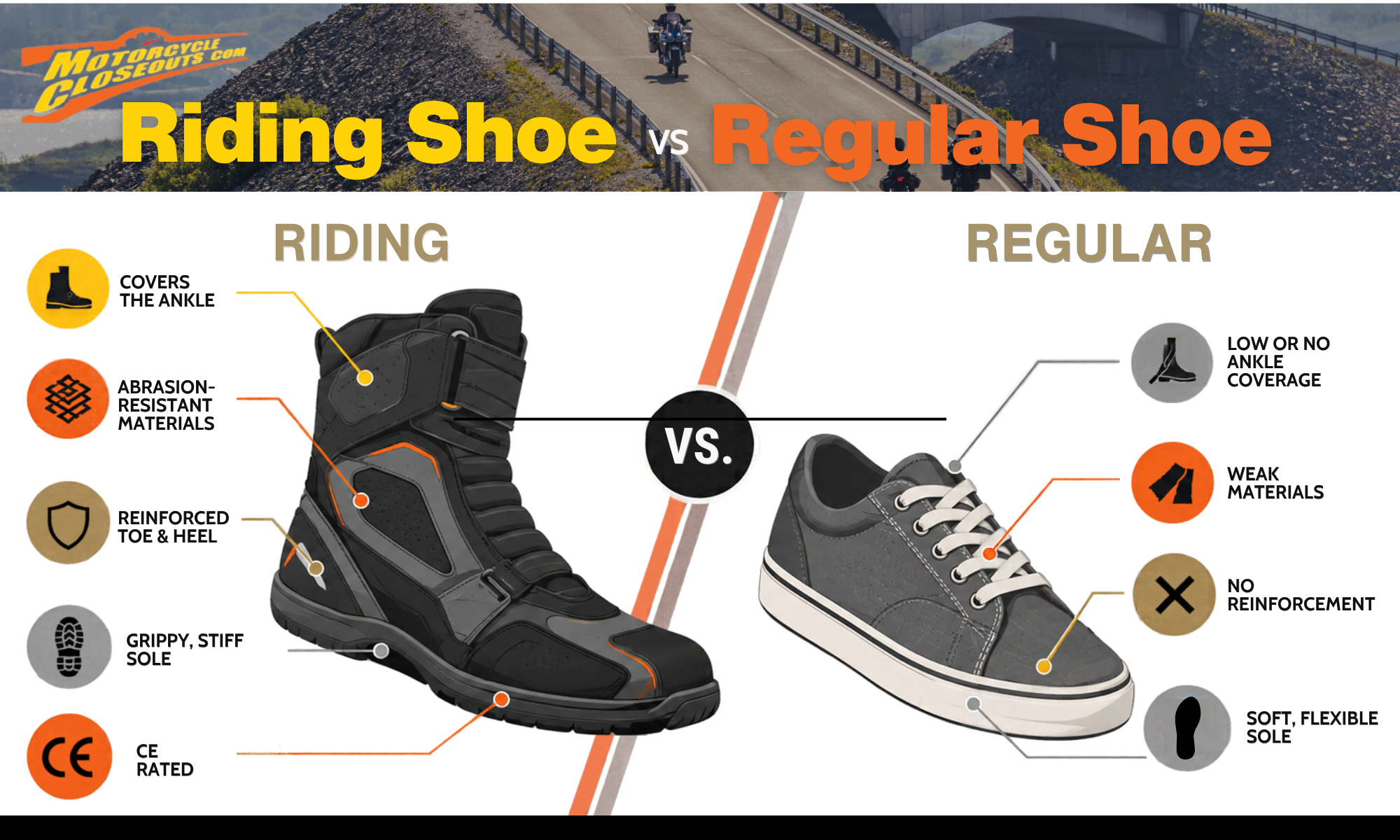
Most of the differences between a riding shoe and regular shoe are structural. A riding shoe covers the ankle bone instead of stopping below it, and uses leather or heavy textile that resists abrasion. The toe box and heel cup are also reinforced to spread out crush forces. Underneath it all, a riding shoe has a stiff, grippy sole that holds its shape on the peg. A regular shoe is built around walking comfort rather than protection, so it trades the ankle coverage, the reinforcement, and the stiff sole for flexibility.
Shoes You Should Avoid When Riding
Plenty of riders reach for shoes they already own without thinking twice about it. These are the common misses and why each one falls short on a bike.
What to avoid:
- Tennis shoes and canvas sneakers: These tear open almost immediately and leave the ankle bare.
- Sandals, slides, and anything open-toed: These shoes leave your skin exposed to hot exhaust pipes, road debris, and pavement.
- Running shoes: Running shoes have soft, rounded soles that roll off the peg and offer nothing at the ankle.
- Hiking boots: Hiking boots cover the ankle but use soft side panels and lug soles that catch on the shifter.
- A standard work boot: This one is a closer call. A steel toe or composite safety toe handles crush loads well, and a leather boot resists abrasion better than canvas. What a work boot lacks is a molded ankle cup, a shift pad, and a sole designed to sit flat on a peg. It beats a sneaker but loses to a real motorcycle boot.
The Types of Motorcycle Boots
Motorcycle footwear splits into four categories, and the right one depends on where you ride rather than what looks best. Riding shoes, street and touring boots, adventure boots, and off-road boots each cover a different kind of riding. Coverage changes as you move through them, and so does walking comfort.
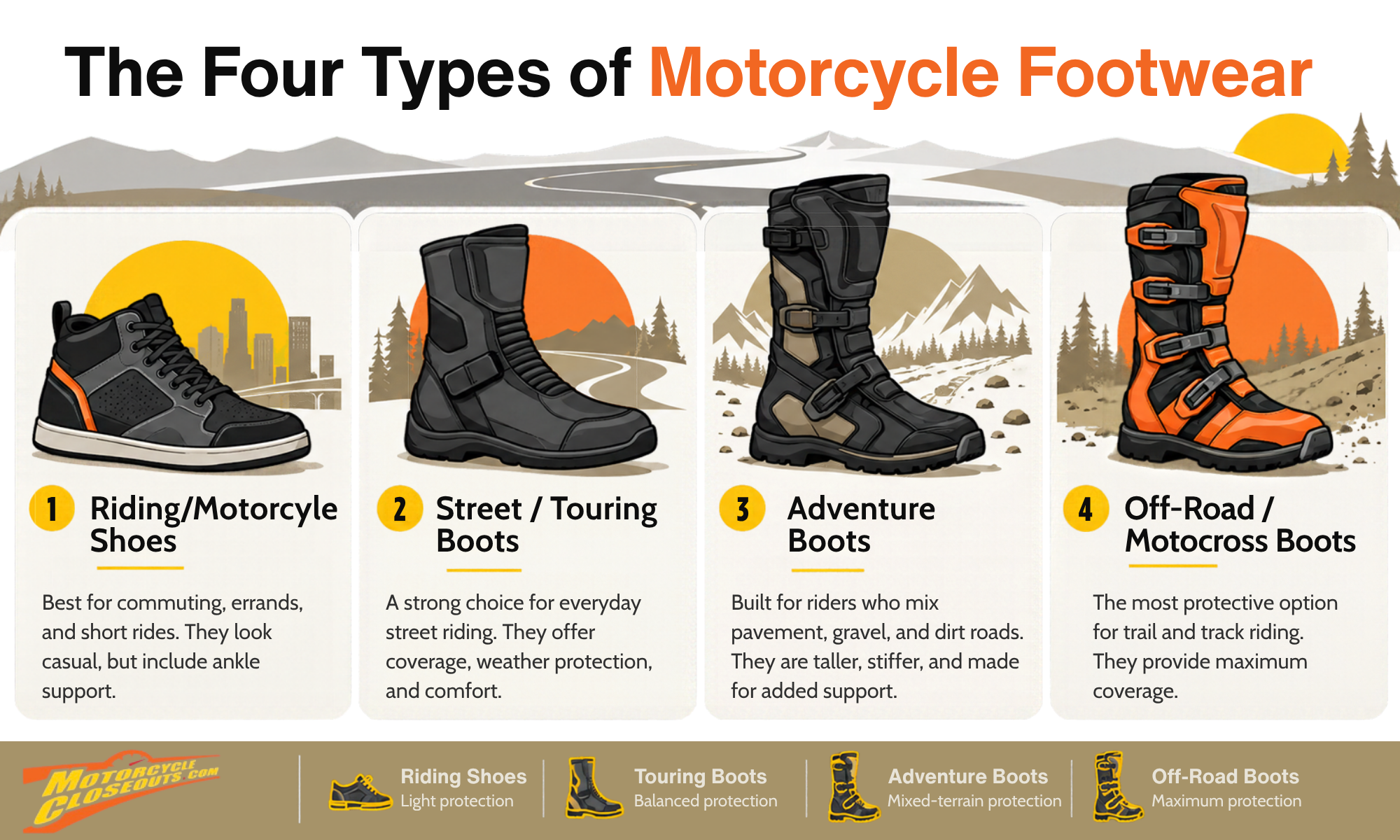
Most street riders land on a touring boot for weekend miles and keep a riding shoe for commuting and short trips, since a casual-looking shoe with ankle support is easier to wear all day than a stiff boot. Adventure boots make sense once gravel and dirt enter the picture, and off-road boots are better when you are on a trail or a track. Match the category to the riding you do the most.
Riding Shoes and Motorcycle Sneakers
A motorcycle sneaker looks like a casual high-top and hides its protection inside. You get abrasion-resistant panels, internal ankle armor, a reinforced toe, and a flat sole, in a shoe you can wear all day. Coverage sits lower than a boot, which makes a dedicated riding shoe the right pick for commuting, errands, and short trips around town.
Street and Touring Boots
Touring boots are the middle ground most street riders land on. They rise several inches above the ankle, often come waterproof, and balance protection against the ability to walk comfortably at a lunch stop. A leather boot in this category holds up well in a slide and ages better than textile.
Adventure Boots
Adventure boots have shin protection and buckle systems paired with a sole you can actually hike in. They are taller and stiffer than touring boots, usually waterproof, and built for riders who mix pavement with gravel and dirt roads.
Off-Road and Motocross Boots
Off-road boots offer the most coverage of any riding boot, running halfway up the shin with multiple buckles and a hinge that limits how far the ankle can rotate. They are more stiff and awkward to walk in than the other options, which is the trade-off for the protection they give on a track or trail.
Getting the Fit Right
Try boots on with the socks you ride in. Your toes should reach the end without pressing into it, and your heel should stay locked in place when you walk. A riding boot feels stiffer than a sneaker out of the box, and leather softens after a few hundred miles. Pair them with real riding socks rather than cotton, which holds sweat and bunches under a buckle.
Footwear Is One Piece of the Puzzle
Boots cover the part of you that hits the ground first in an accident. The rest of your protective gear covers everything above it. A DOT-approved helmet comes first, and a full-face helmet brings a built-in face shield along with it. Riders in an open-face lid need separate eye protection to meet most state helmet laws and keep debris out of their vision.
From there, a motorcycle jacket with CE-rated armor shields your upper body, and motorcycle pants or riding jeans cover your legs far better than regular denim. Motorcycle gloves round out the set. If you are building a kit from scratch, our breakdown of what to wear on a motorcycle walks through each piece, and the difference between CE Level 1 and Level 2 armor explains what those labels mean.
Gear Up at Motorcycle Closeouts
Picking footwear comes down to a few things that do not change. Cover the ankle, choose materials and reinforcement built for a slide, and match the category to the riding you do most. Get those right and the rest is sizing and personal preference.
Every rider should be able to afford the right gear. At Motorcycle Closeouts, we carry first-quality motorcycle footwear from brands riders know at 30% to 50% off retail, all backed by full manufacturer warranties and easy returns. Nothing we sell is damaged or blemished, just overstock and prior-year models at closeout prices.
Browse our current boot deals or reach out to our rider support team if you want help sorting out sizing between brands. We ride too, and we are happy to talk through it.
Riders in the Kansas City area can try boots on in person at our Fast Gear Fast store.
Explore Popular Articles
What Shoes Should You Wear on a Motorcycle? A Rider’s Guide to Proper Footwear
What Shoes Should You Wear on a Motorcycle? A Rider’s Guide to Proper Footwear Short Answer: For the...

How Dangerous Are Motorcycles, and How Much Does Gear Reduce the Risk?
Short Answer: Riding a motorcycle is significantly more dangerous than driving a car. The good news...

How Much Does It Cost to Buy & Ride a Motorcycle?
Short answer: A newer rider can often get started for about $6,000 to $12,000 when they include the...
CE Level 1 vs Level 2 Armor Explained
Short Answer: Both CE Level 1 and Level 2 armor pass European safety tests for impact protection. T...

What to Bring on a Motorcycle Road Trip
Short Answer: For a motorcycle road trip, pack your protective gear (helmet, jacket, gloves, boots,...
How to Get Your Motorcycle License: A Step-by-Step Guide for New Riders
Short Answer: Getting your motorcycle license takes three steps: passing a written knowledge test, p...