
How to Clean a Dirt Bike Helmet: Step by Step Tutorial

A Rider’s Guide To Cleaning Your Helmet
Everyone who rides a dirt bike knows the exhilarating feeling of mud and soil splashing as they tear through the terrain. Whether you're a seasoned motocross rider or a new biker, your dirt bike helmet needs just as much care and attention as your bike. A clean helmet is not just about being pleasant to the eye or itch-free on your head, but it can notably impact your performance and, more importantly, your safety. Even more so when you consider the sweat, mud, and dead bugs that make a new home in the helmet's interior if you don't take the correct care of your helmet.
Your helmet doesn’t need complicated equipment or expensive cleaners to freshen up. With a few household items and gentle handling, you will be able to completely transform your dirt-caked motorcycle helmet back into a sparkling headgear. As bike enthusiasts, we have mastered dirty helmet cleaning, and want to share our tried and tested process with you. In this blog post, we will provide a detailed step-by-step guide on how to clean a dirt bike helmet, helping prolong its life while ensuring it offers you the best possible protection every time you hit the road or the dirt track.
The Importance of a Clean Helmet
Navigating rough terrains with a smudged visor or the itch of dried sweat against your skin is something no rider enjoys. Helmet hygiene isn’t just a matter of comfort but is closely tied to performance and safety. Your helmet - be it a street helmet for cruising, a motocross helmet for rough terrains, or a simple mountain bike helmet for biking adventures - captures sweat as you ride. Over time, this sweat can breed bacteria, leading to unpleasant odors and potential skin irritations. Further, accumulated dirt and dead bugs on the helmet's surface can obscure your vision, making riding risky. Maintaining a clean helmet improves visibility and comfort, ensuring you can spot every turn and don't have to worry about built-up bacteria and grime in your helmet.
Knowing when to replace your helmet can be a tough decision for many riders. Consider factors like the age of the helmet, its usage, and the condition of its outer shell, face shield, inner pads, and removable liner. A helmet with cracks that stay moist, smelly, and soiled despite cleanings might indicate it is time to visit Motorcycle Closeouts for an affordable new helmet.
Now that we've addressed the importance of a clean helmet, let's move to rolling up your sleeves and starting the cleaning process.
Preparations: Items You Need
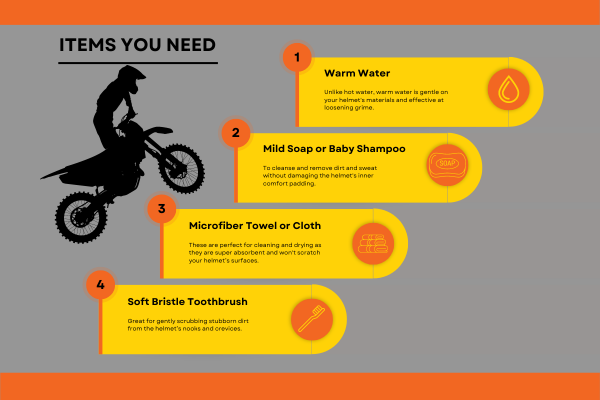
Before we dive into the process, it's crucial to gather the necessary cleaning materials. You might be surprised, most of them are common household items. Here’s a list of what you need:
1. Warm water: Unlike hot water, warm water is gentle on your helmet's materials and effective at loosening grime.
2. Mild soap or baby shampoo: To cleanse and remove dirt and sweat without damaging the helmet's inner comfort padding.
3. Microfiber towel and cloth: These are perfect for drying as they are super absorbent and won't scratch your helmet’s surfaces.
4. Soft bristle toothbrush: Great for gently scrubbing stubborn dirt from the helmet’s nooks and crevices.
If you don't find a soft-bristled toothbrush, a kitchen sponge can be used. In case you don't have baby shampoo, a mild dish soap can work as a substitute. Remember, the key word here is "mild". You might be tempted to reach out for harsh chemicals, like bleach or strong detergents, but these could deteriorate the helmet’s protective qualities.
If your helmet has a detachable interior, like removable cheek pads and liner, you can put them in your washing machine on a gentle cycle. Make sure to place them in a mesh laundry bag or pillowcase to prevent damage during the cycle.
Preparing in advance will streamline the cleaning process. Plus, these items come in handy for cleaning and maintaining all your protective gear including gloves, jacket, and riding boots. Having gathered what you need, now let's move on to our step-by-step guide on how to get your helmet looking and smelling brand new.
Step-by-Step Tutorial: How to Clean a Dirt Bike Helmet
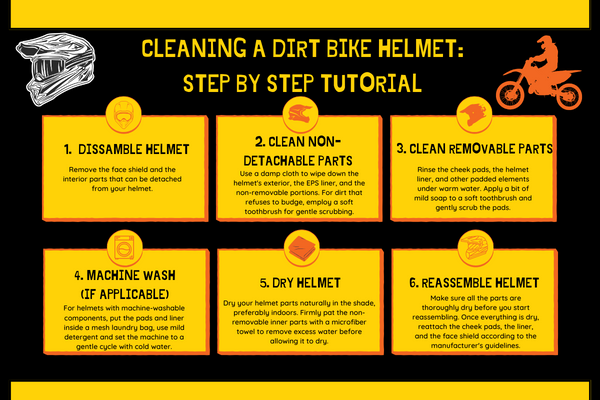
Step 1: Disassembling Your Helmet
Begin by removing the face shield, visor, and the interior parts that can be detached like the cheek pads and the interior lining. Being gentle is crucial while doing this to avoid any kind of damage.
Step 2: Cleaning the Non-Detachable Part
Use a damp cloth or wet microfiber cloth to wipe down the helmet's exterior, the EPS liner, and the non-removable portions. For stubborn dirt that refuses to budge, soften it up with a cloth soaked in warm soapy water or a gentle detergent, then employ your soft toothbrush for gentle scrubbing.
Step 3: Washing the Removable Parts
Rinse the cheek pads, the helmet liner, and other padded elements under warm water. Your kitchen sink could be an ideal place for this. Apply a bit of baby shampoo or mild soap to a soft toothbrush and gently scrub the pads. Use your fingers to knead the suds into the padding and crush any grudgingly persistent dirt.
Step 4: The Machine Wash (if applicable)
For helmets with machine-washable components, put the pads and liner inside a pillowcase or mesh laundry bag to protect them. Use mild detergent and set the machine to a gentle cycle with cold water.
Step 5: Drying Your Helmet
Dry your helmet parts naturally in the shade, preferably indoors. Minimize exposure to direct sunlight as it can degrade the helmet's material over time. Firmly pat the non-removable inner parts with a microfiber towel to remove excess water before allowing it too dry. Carefully dab the visor and helmet surface, avoiding heavy rubbing that might cause scratches.
Step 6: Reassembling Your Helmet
Make sure all the parts are thoroughly dry before you start reassembling - this is fundamental to avoid mold growth. Once everything is dry, reattach the cheek pads, the liner, and the face shield according to the manufacturer's guidelines.
With these easy-to-follow steps, you'll be well on your way to cleaner and more enjoyable rides! Whether your preference is hitting the open road or challenging the dirt trails, a fresh helmet makes the experience that much better.
Tips For Maintaining A Clean Helmet
Keeping your helmet in top shape doesn't end with cleaning. Regular maintenance and proper storage are just as important. Here are a few simple tips to keep your helmet fresh and ready for your next ride.
1. Post-Ride Wipe Down: When you return from a road trip or a dirt biking session, give your helmet a quick wipe-down. Using a damp cloth, gently remove any dirt or bugs that may have hitched a ride on your helmet. This goes a long way in maintaining your helmet’s cleanliness and minimizing the time you need for a full helmet wash.
2. Store Your Helmet Correctly: Always keep your helmet in a cool, dry area and away from direct sunlight when you're not using it. It's best to store it in a helmet bag or box to protect it against dust.
3. Routine Helmet Cleaning: While the frequency of cleaning your helmet can depend on how often and where you ride, a general rule is to give it a deep clean every few months. For extreme motocross riders, you might need to clean your helmet more frequently due to the higher amount of dirt encountered.
No one understands biking essentials better than we do at Motorcycle Closeouts. We provide a range of quality riding gear at discounted prices for every type of rider out there. So, if you need a new helmet after all or want to upgrade your protective gear, we've got you covered. Thank you for joining us on this journey through helmet cleanliness. We hope that you're now feeling more confident in maintaining the look, smell, and comfort of your helmet. Remember, a clean helmet makes for a safer, more comfortable ride, and more enjoyable motorcycling or dirt biking experience!
Explore Popular Articles

How Dangerous Are Motorcycles, and How Much Does Gear Reduce the Risk?
Short Answer: Riding a motorcycle is significantly more dangerous than driving a car. The good news...

How Much Does It Cost to Buy & Ride a Motorcycle?
Short answer: A newer rider can often get started for about $6,000 to $12,000 when they include the...

CE Level 1 vs Level 2 Armor Explained
Short Answer: Both CE Level 1 and Level 2 armor pass European safety tests for impact protection. T...

What to Bring on a Motorcycle Road Trip
Short Answer: For a motorcycle road trip, pack your protective gear (helmet, jacket, gloves, boots,...

How to Get Your Motorcycle License: A Step-by-Step Guide for New Riders
Short Answer: Getting your motorcycle license takes three steps: passing a written knowledge test, p...

Everything You Need Before Your First Ride
Short Answer: Getting ready for your first motorcycle ride means lining up a few things before you t...