
What is Motocross? Complete Guide to Off-Road Racing Sport
Table of Contents:
The Short Answer: Motocross is an off-road motorcycle racing sport that combines high speed, skill, and technical riding on motocross tracks. Getting started requires basic motorcycle experience, proper safety gear, and training at a beginner-friendly dirt track.
Motocross racing stands as one of the most thrilling motorsports worldwide, drawing millions of riders and spectators across all skill levels. This high-energy sport tests motocross riders' abilities through rough terrain featuring jumps, corners, and obstacles, while building strength, reflexes, and racing expertise. Whether you're an experienced street rider looking for a new challenge or completely new to dirt bikes, this guide will walk you through everything you need to know about getting started in motocross.
Understanding Motocross Fundamentals
Motocross racing combines high-speed motorcycle racing with challenging terrain, requiring both technical skill and physical fitness. Races take place on off-road tracks featuring jumps, berms, and various obstacles that test riders' abilities to navigate dirt tracks at higher speeds.
Track and Race Format Basics
Motocross tracks stretch between 1 to 2 miles, incorporating steep hills, tight corners, and multiple jumping sections. The track surface of each motocross course changes throughout each race as ruts form and lines develop, challenging riders to adapt their racing lines constantly.
Typical Race Formats:
- Sprint-style motos (15-30 minutes)
- Longer endurance events (2-3 hours)
Racing Classes:
| Engine Size | Rider Level | Typical Age Group |
| 50cc | Youth/Beginners | 4-7 years |
| 65cc | Junior riders | 7-10 years |
| 85cc | Advanced youth | 10-14 years |
| 125cc | Intermediate | 14+ years |
| 250cc | Amateur/Professional | 16+ years |
| 450cc | Professional/Elite | Adult |
Essential Motocross Riding Techniques
Understanding proper motocross bike technique is essential for both safety and performance on the track. These fundamental skills form the foundation of every successful motocross rider's toolkit.
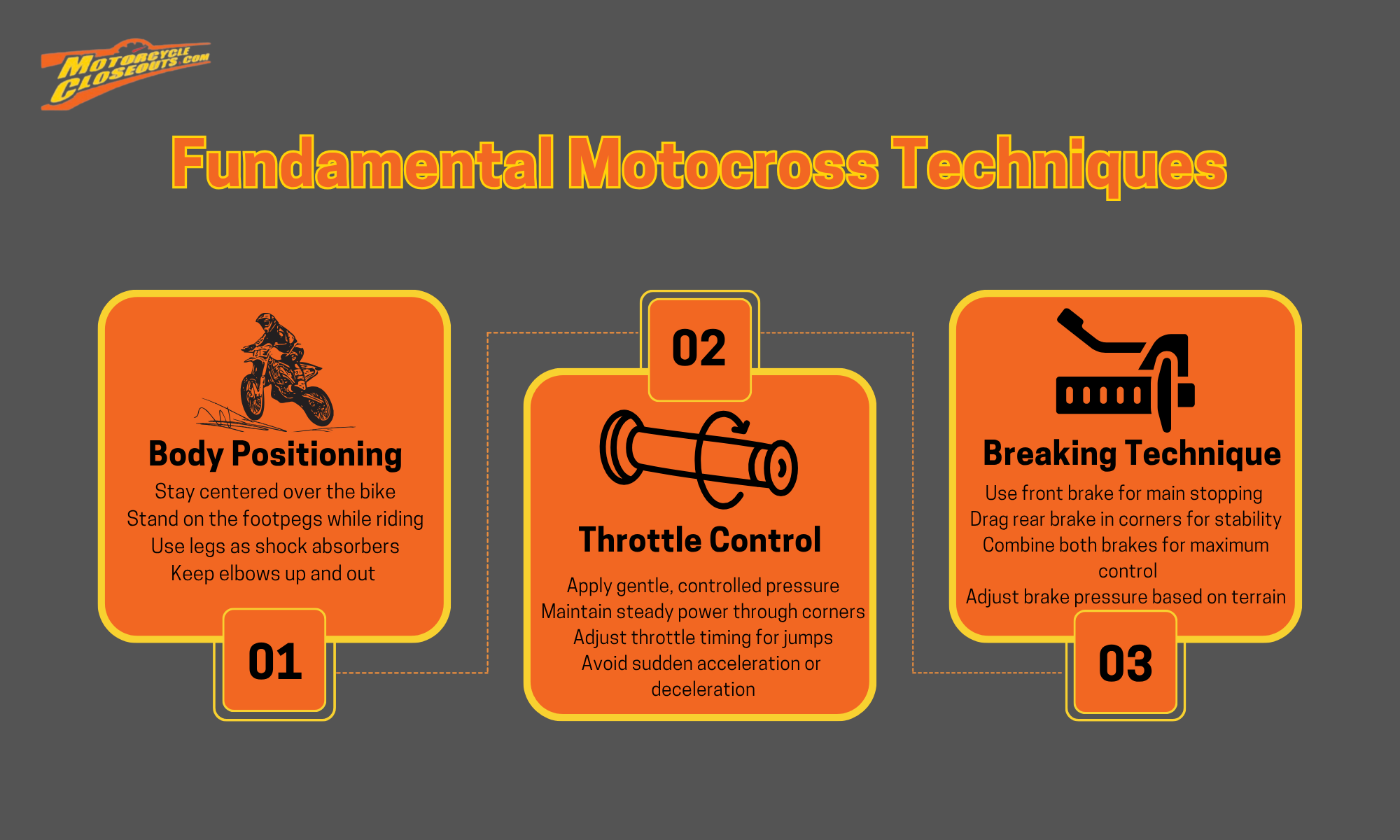
- Body Positioning
- Stay centered over the bike
- Stand on the footpegs while riding
- Use legs as natural shock absorbers
- Keep elbows up and out for better control
- Throttle Control
- Apply gentle, controlled pressure
- Maintain steady power through corners
- Adjust throttle timing for jumps
- Avoid sudden acceleration or deceleration
- Braking Technique
- Use front brake for primary stopping power
- Drag rear brake in corners for stability
- Combine both brakes for maximum control
- Adjust brake pressure based on terrain
Physical Preparation
Motocross demands exceptional fitness levels from riders. A typical motocross race burns up to 400 calories per 30 minutes, requiring substantial upper body strength for bike control and leg power for absorption and stability. Riders often supplement their practice with cardio workouts like running or cycling, along with strength training focused on core stability and arm endurance. Regular stretching helps prevent injury and improves flexibility needed for dynamic body movements during races.
Finding Your First Motocross Bike
Selecting your first motocross bike is a foundational decision that shapes your riding experience. Adult riders should focus on 250cc four-stroke dirt bikes, which offer a manageable blend of power and control. Younger motocross riders typically start with 85cc-150cc bikes, depending on their size and experience level. Four-stroke engines provide smoother power delivery than two-strokes, making them more forgiving for newcomers to motocross racing.
Engine Sizes and Power Options
Four-stroke mx bikes come in several displacement options:
- 125cc-150cc: Ideal for teens and smaller adults
- 250cc: Perfect for most adult beginners
- 450cc: Better suited for experienced riders
Used dirt bikes offer substantial savings for beginners, often costing 40-60% less than new models. When buying used, look for bikes with under 100 hours of track time and complete maintenance records. Newer bikes include modern safety features and better reliability but require a larger upfront investment.
Basic Maintenance Requirements
Motocross bikes need regular attention to stay safe and reliable. Following a consistent maintenance schedule is essential for optimal performance:
| Maintenance Task | Frequency | Time Required |
| Air filter cleaning | Every 1-2 rides | 15 minutes |
| Oil changes | Every 510 riding hours | 30 minutes |
| Chain adjustment | Weekly | 10 minutes |
| Tire pressure check | Before each ride | 5 minutes |
Expect to spend $500-$1,000 annually on basic maintenance, depending on riding frequency. Learning these basic mechanical skills can save you money and help you understand your off-road motorcycle better.
Purchasing Guidelines
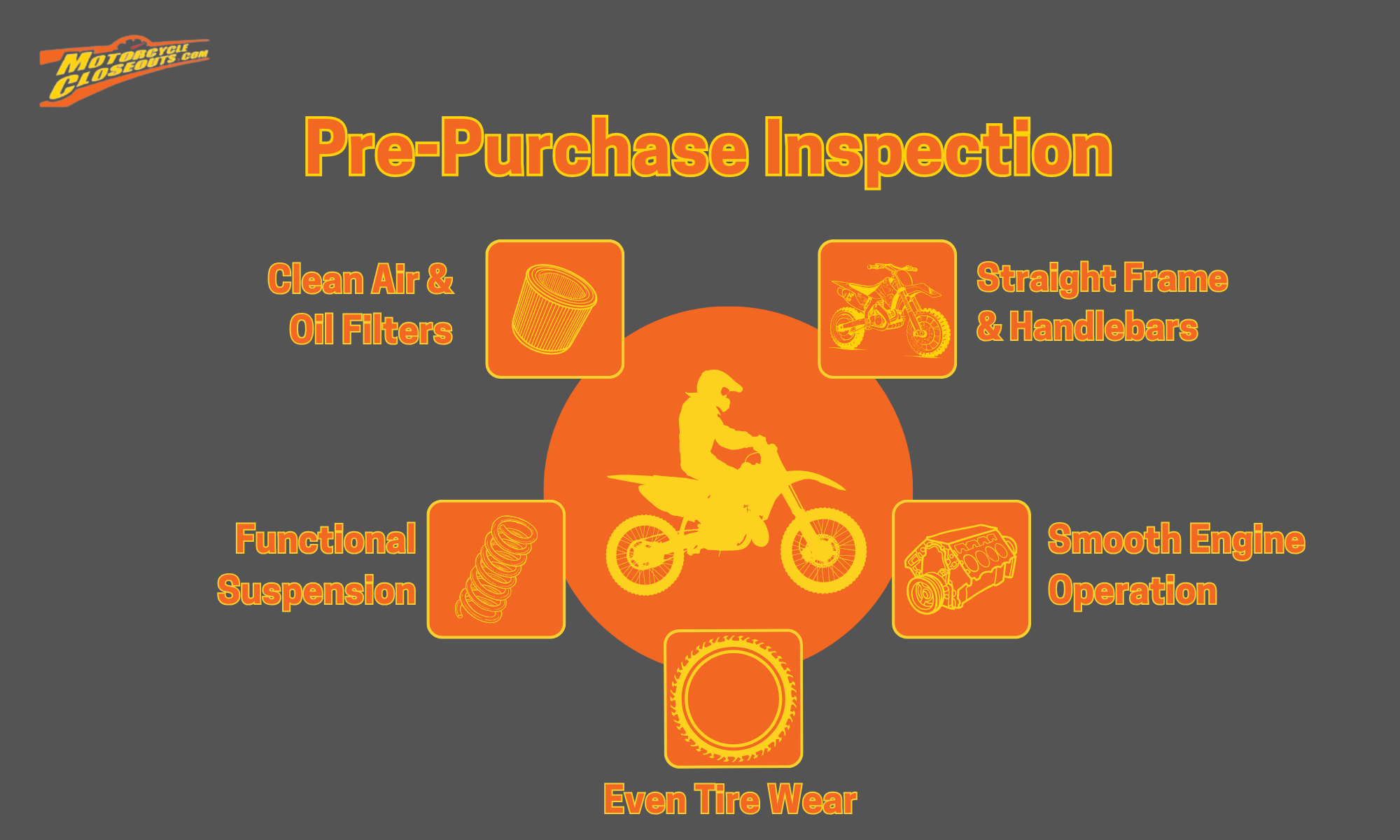
Dealerships provide warranties and certified pre-owned options but charge premium prices. Private sellers often offer better deals but require careful inspection. When examining a used motocross bike, check for:
- Straight frame and handlebars
- Smooth engine operation
- Clean air filter and oil
- Even tire wear
- Functional suspension
Avoid bikes with frame damage, excessive engine noise, or signs of water damage. Always test ride before purchasing and bring an experienced rider to help evaluate the bike's condition.
Getting Track Ready
Finding the right motocross track to start riding involves several options based on your experience level. Getting started is super simple. Look to find a big backyard or a large field nearby to get used to riding your bike. As your skills develop, smaller local off-road tracks offer the next step up - these facilities typically feature beginner-friendly layouts with wider turns and smaller jumps.
Professional motocross racing facilities provide the full racing experience, but it's best to master basic skills first. These tracks offer varying difficulty levels, from novice to expert layouts. Most motocross riders start with regular practice sessions during off-peak hours when tracks are less crowded.
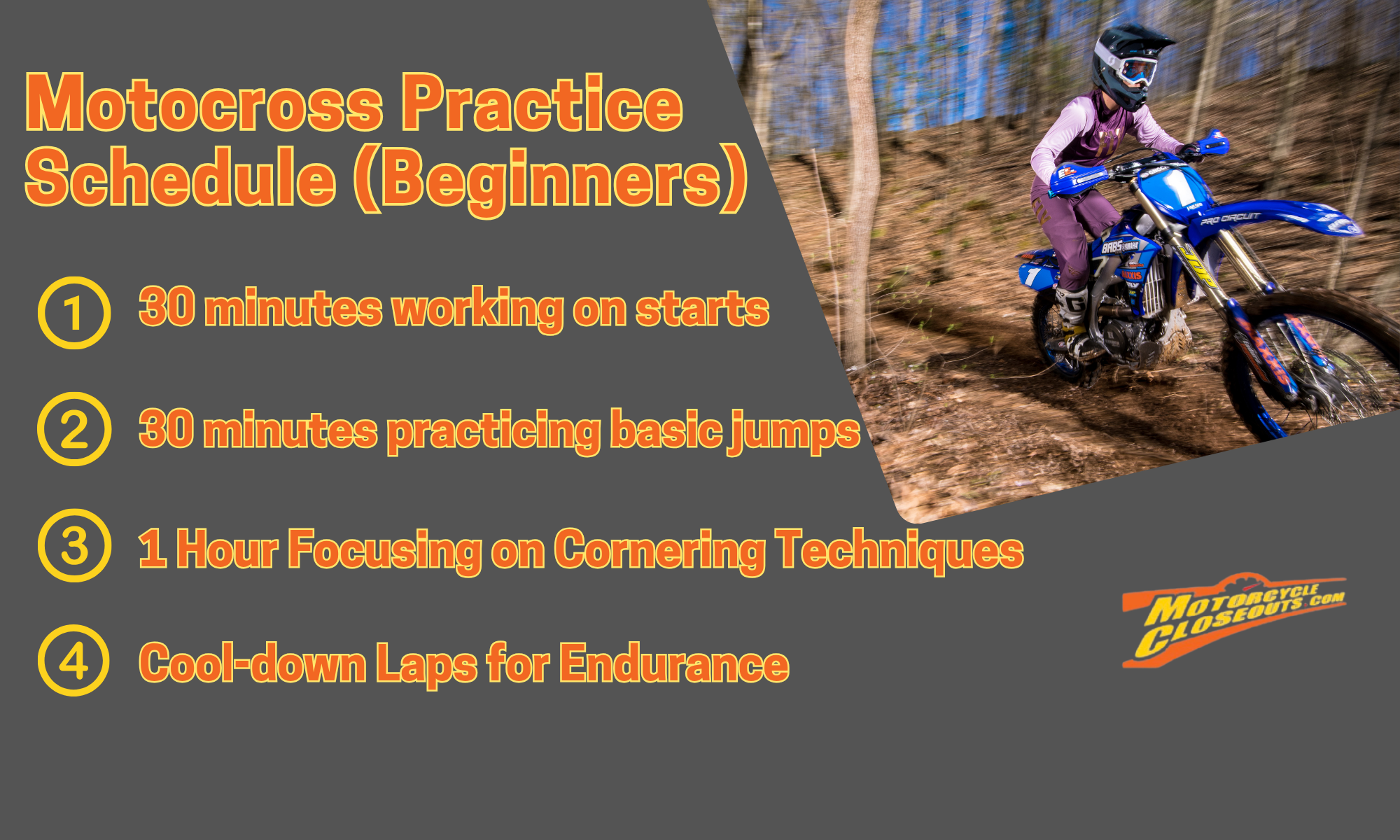
Training programs can help accelerate your progress significantly. Local riding schools and clinics teach proper techniques for cornering, jumping, and bike setup. A structured practice routine might include:
Basic Practice Schedule
- 30 minutes working on starts
- 1 hour focusing on cornering techniques
- 30 minutes practicing basic jumps
- Cool-down laps for endurance
Avoid common beginner mistakes like rushing into advanced features or skipping fundamental skills. Start with flat corners and small rollers before attempting bigger jumps. Most riders need 3-6 months of regular practice to build basic proficiency
Track etiquette keeps everyone safe. Here are some general practices to follow:
- Always ride in the designated direction
- Check blind spots before merging onto the track
- Give faster riders space to pass
- Follow facility-specific rules about flags
- Observe designated passing zones
- Adhere to pit area conduct guidelines
Before hitting the motocross course, you'll need proper documentation. This typically includes:
- Track membership or day pass
- Signed liability waiver
- Proof of medical insurance
- American Motorcyclist Association (AMA) membership for racing events
Remember that different tracks have varying requirements - check their websites or call ahead to confirm specific policies.
Essential Motocross Gear & Safety Equipment for Riders
Your safety on the motocross track starts with proper protective gear. A DOT and ECE-certified motocross helmet forms the foundation of your protection, followed by a chest protector, neck brace, knee braces, and appropriate riding attire. Let's break down the must-have gear for every motocross rider.
Helmet Selection and Standards
A properly certified motocross helmet should meet DOT and ECE 22.06 standards.
Here's what to look for in a motocross helmet:
✓ Multiple shell sizes for proper fit
✓ Advanced ventilation systems
✓ Moisture-wicking liner materials
Modern helmets also include:
✓ Removable, washable padding
✓ Wide eye ports to accommodate goggles
Also, remember to replace your helmet after any significant impact or every 5 years, whichever comes first.
Body Protection Essentials
Complete body armor coverage is essential for motocross safety. Each piece of protective equipment guards specific vulnerable areas during crashes and impacts:
Core Protection:
- Chest Protector - Shields torso, ribs, and upper back from impacts and roost
- Back Protector - Protects spine and lower back from compression injuries
- Neck Brace - Prevents hyperextension and reduces neck injury risk during crashes
Limb Protection:
- Knee Braces - Prevent hyperextension and lateral knee injuries during jumps and falls
- Elbow Guards - Protect joints from impacts and abrasions in corners and crashes
- Impact Shorts - Cushion tailbone, hips, and thighs from hard landings
When selecting body armor, ensure proper fit and comfort for extended riding sessions. Quality protection should allow full range of motion while providing comprehensive coverage of impact zones.
Boots and Riding Gear
Motocross boots requirements:
- Quality boots feature replaceable soles for extended longevity
- Secure buckle closure systems ensure proper fit and protection
- Built-in internal ankle protection safeguards against injuries
For riding attire, choose pants and jerseys made from abrasion-resistant materials with mesh panels for airflow. Consider adding moisture-wicking base layers for comfort during long rides.
Maintenance Tips
Clean your gear after each track session using manufacturer-recommended products. Store helmets in a cool, dry place away from direct sunlight. Check all buckles, straps, and protective padding regularly for wear. When shopping for replacement gear, MotorcycleCloseouts.com offers certified protective equipment at significant savings, helping riders stay safe without breaking the bank.
Time to Start Your Motocross Journey
Your motocross journey starts with three essential steps: gear up with certified safety equipment, master fundamental techniques through proper training, and gradually progress on beginner-friendly tracks. Success in motocross comes from consistent practice combined with unwavering commitment to safety.
Remember that every professional rider started exactly where you are now. Focus on building solid fundamentals:
- Proper body positioning
- Throttle control
- Cornering technique
Once you are proficient in these, then continue advancing to more challenging features. Regular practice sessions, ideally 2-3 times per week, will accelerate your skill development while building the physical fitness motocross demands.
How Motorcycle Closeouts Can Help
Quality protective gear forms your foundation for safe progression. Essential equipment like a DOT/ECE-certified helmet, chest protector, knee braces, and proper riding boots is a necessary first step to get started. Check out our motocross collection today to gear up safely and begin your journey with closeout deals up to 70% off retail prices.
Explore Popular Articles

How Dangerous Are Motorcycles, and How Much Does Gear Reduce the Risk?
Short Answer: Riding a motorcycle is significantly more dangerous than driving a car. The good news...

How Much Does It Cost to Buy & Ride a Motorcycle?
Short answer: A newer rider can often get started for about $6,000 to $12,000 when they include the...
CE Level 1 vs Level 2 Armor Explained
Short Answer: Both CE Level 1 and Level 2 armor pass European safety tests for impact protection. T...

What to Bring on a Motorcycle Road Trip
Short Answer: For a motorcycle road trip, pack your protective gear (helmet, jacket, gloves, boots,...
How to Get Your Motorcycle License: A Step-by-Step Guide for New Riders
Short Answer: Getting your motorcycle license takes three steps: passing a written knowledge test, p...

Everything You Need Before Your First Ride
Short Answer: Getting ready for your first motorcycle ride means lining up a few things before you t...